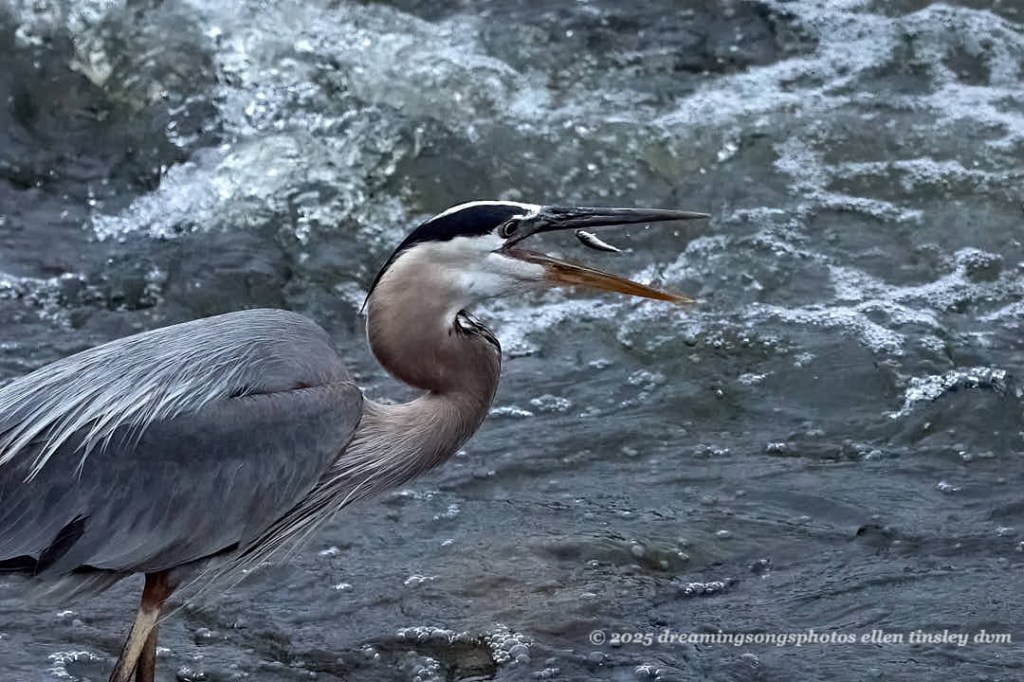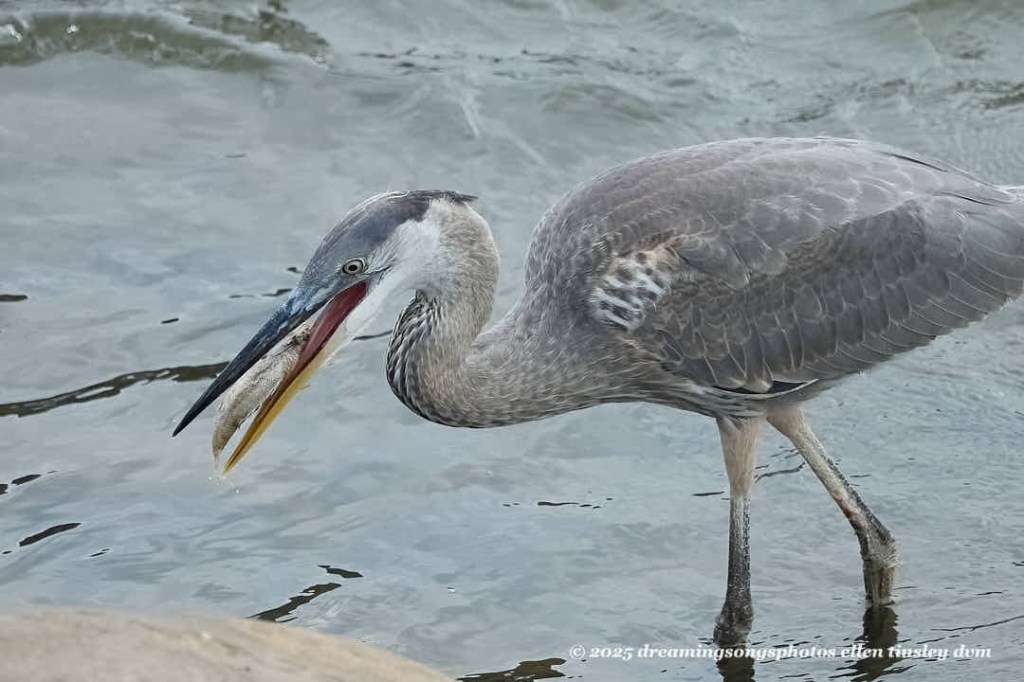
If you have a moment, I can show you how to tell a fledgling great blue heron from an adult. The quickest way to tell the age is to check the head! The adult has a head crowned with a white stripe that is enclosed in a black stripe and often a plume or two off the backside of the crown. The fledgling has a solid gray-capped head. It has no plumes. There is a big color difference in the body feathers too. Light pearl gray youngster and adult deep slate gray. There are other differences but for standing at the riprap and trying to decide is that a baby or is that an adult remember: it’s pretty much all in the head.

adult great blue heron
fledgling, immature great blue heron

Quick survey of the breakfast flights at the Jordan Lake Dam tailrace riprap this morning. Just thought I would let y’all get a taste of how active the birds are being. At least three times I saw groups of 15 ospreys up in the air. There were 11 great egrets. 6 to 10 great blue herons. One green heron! If you get a chance, and even if you do not have binoculars or a telephoto lens, bring your chair and sit down at the riprap and just watch. The ospreys are fishing at the upper end of the river by the dam. I hope you get to go by and enjoy them.

Ospreys and Great Egrets

This great blue heron youngster, from this year’s breeding season, has an expression that I have also seen on five-year-old humans. He seems to be saying “OK, I got here to this place. Not sure what this place is. Now, what am I supposed to do next?”

immature great blue heron