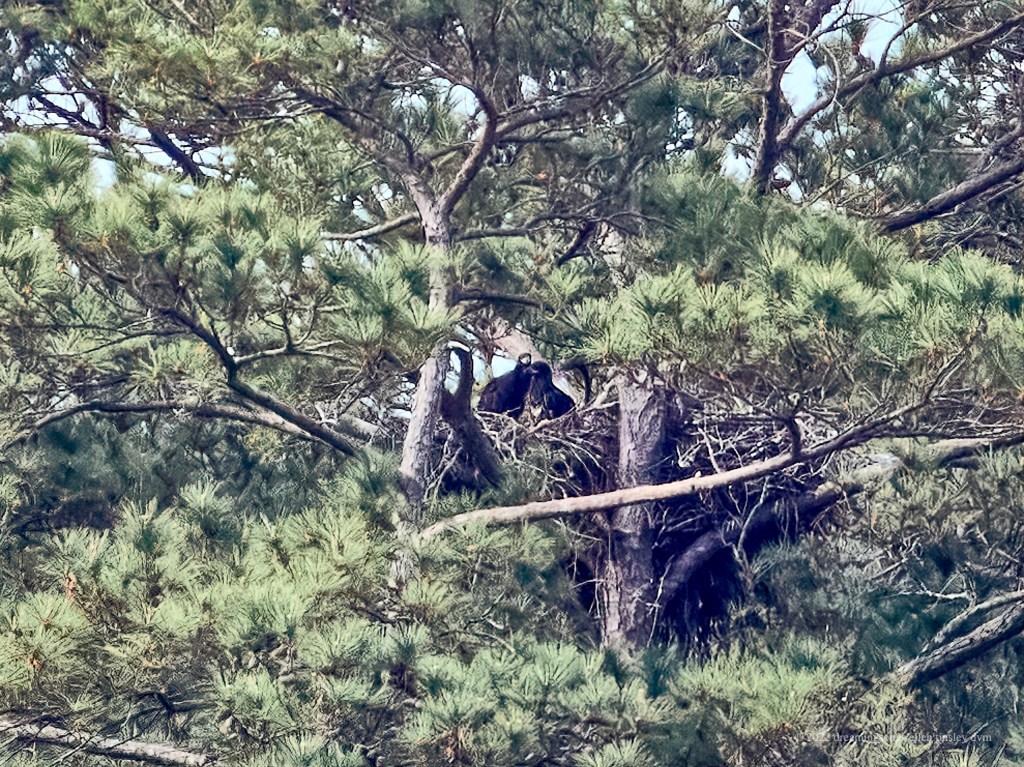
Jordan Lake. H&G nest. You would think that with a fish that big, which Dad Hershey had just caught, it would make quite a meal for his two chicks. Hershey dropped the fish into the nest. The two chicks fought over it. Within three minutes it was apparent that the fish was all gone because the two chicks separated to each end of the nest.
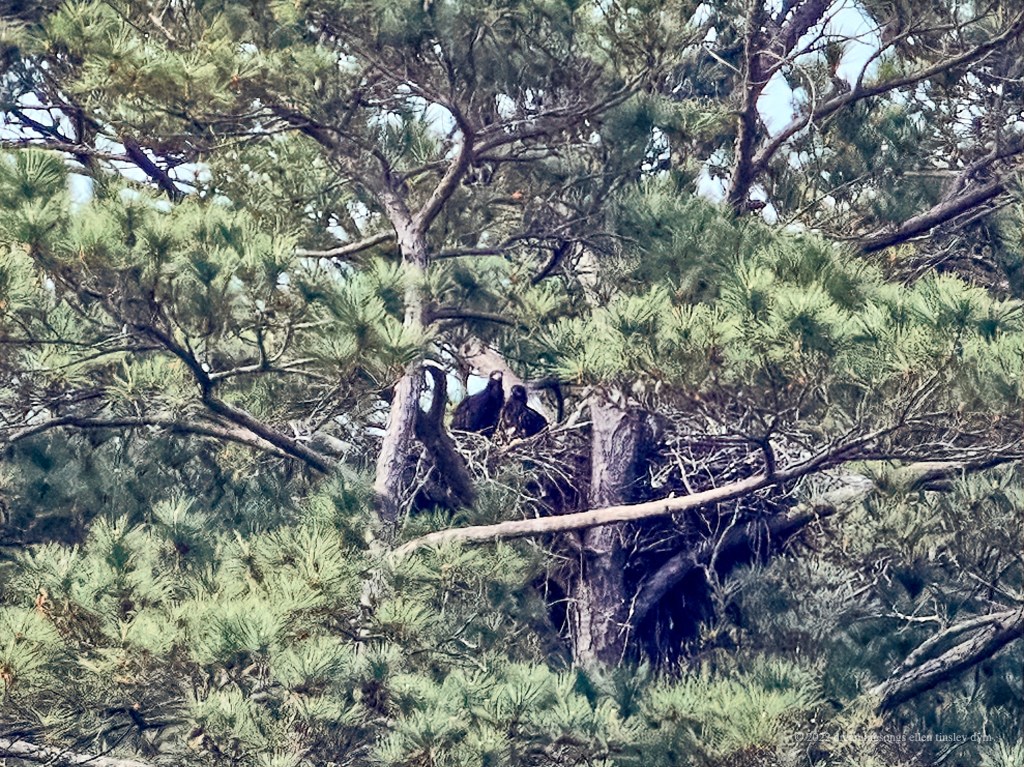
Jordan Lake H&G nest. The bald eagle chick on the left has really gotten some air underneath his feet. He has bounced straight up into the air above the brim of the nest. Landed then jumped a little bit forward. Fought for his balance. Decided he had enough exercise for the moment. I called this trampolining. It is the next step before branching.
Jordan Lake. H&G nest. Brother Eaglet looking down at his sibling, “I asked mom if she was certain that she should just be sitting there and not bringing us any food“. The two eaglets pouted a few moments longer. Finally they both stomped off to the other end of the nest where they could have a royal bald eaglet pout.
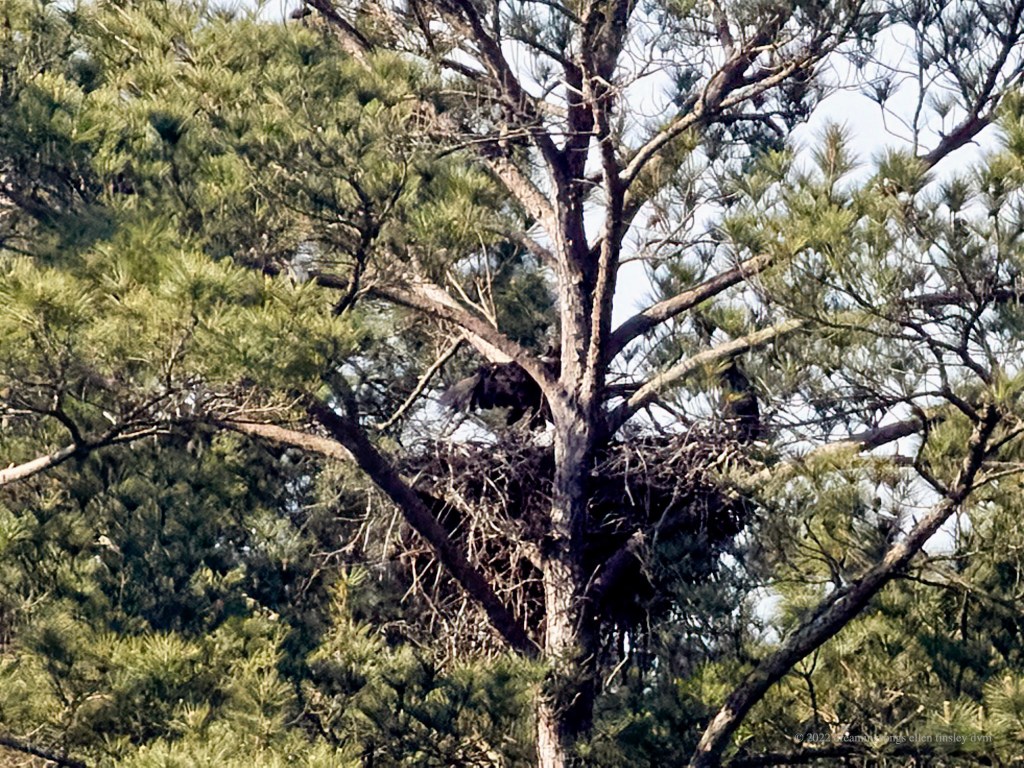
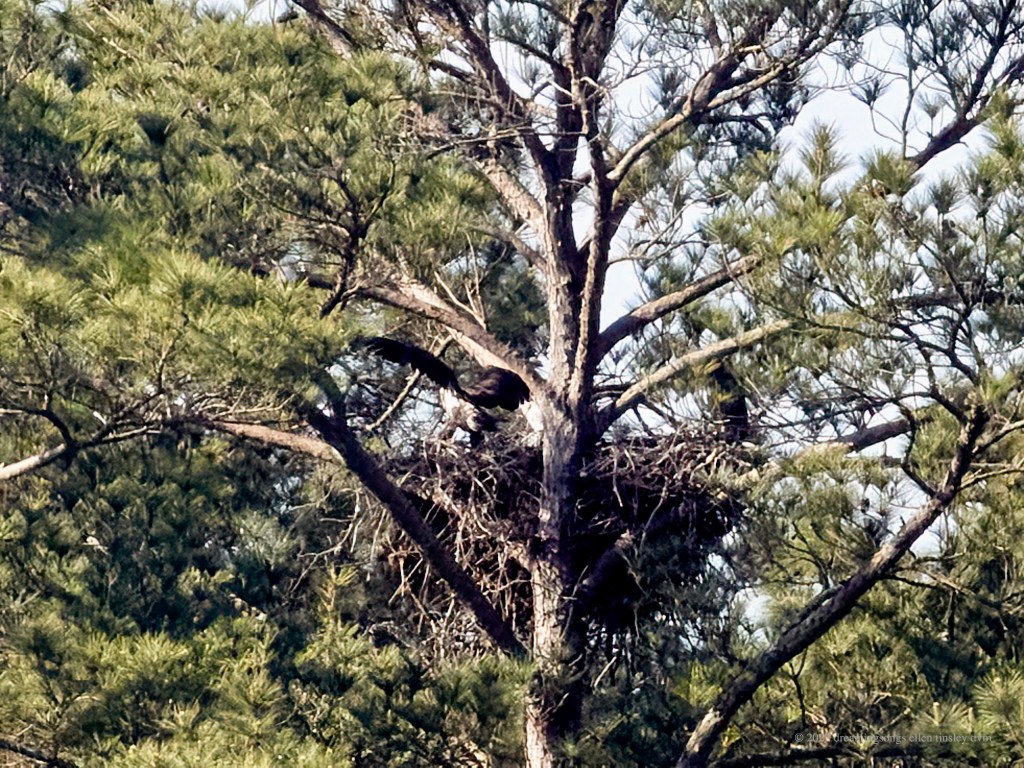
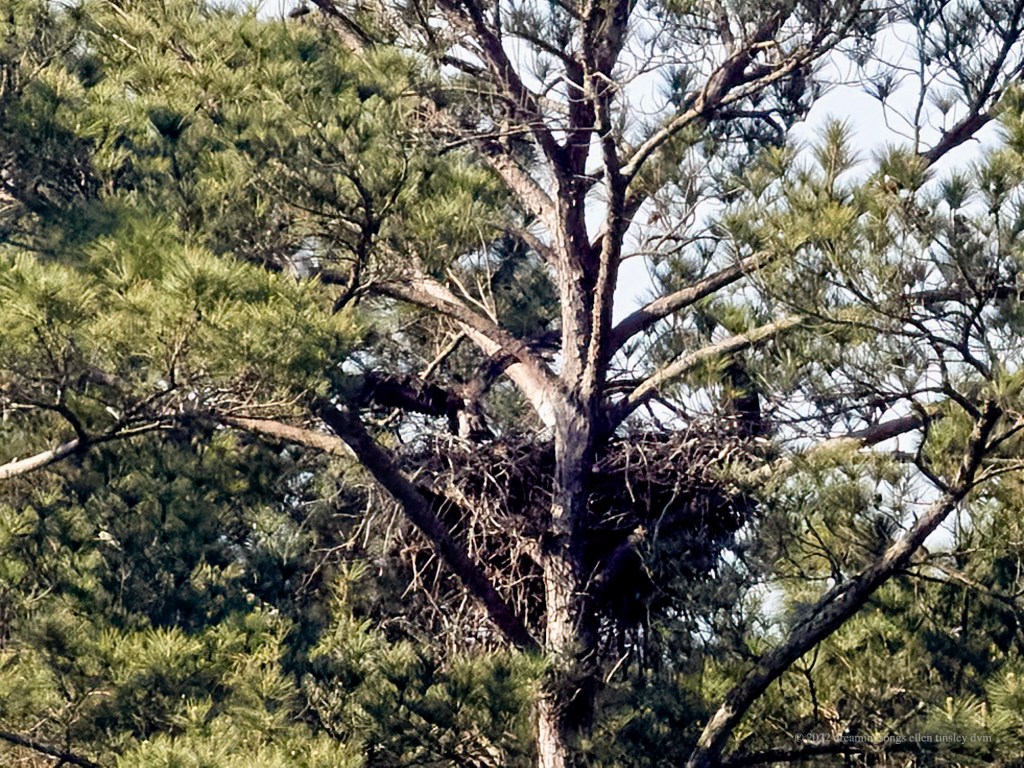
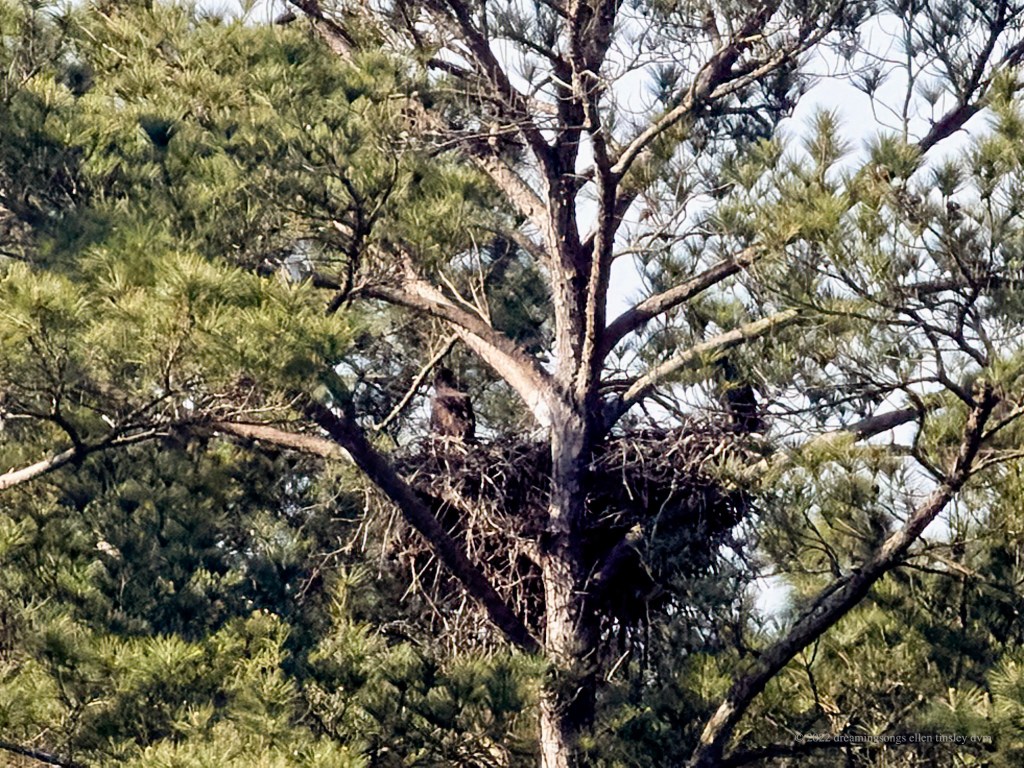
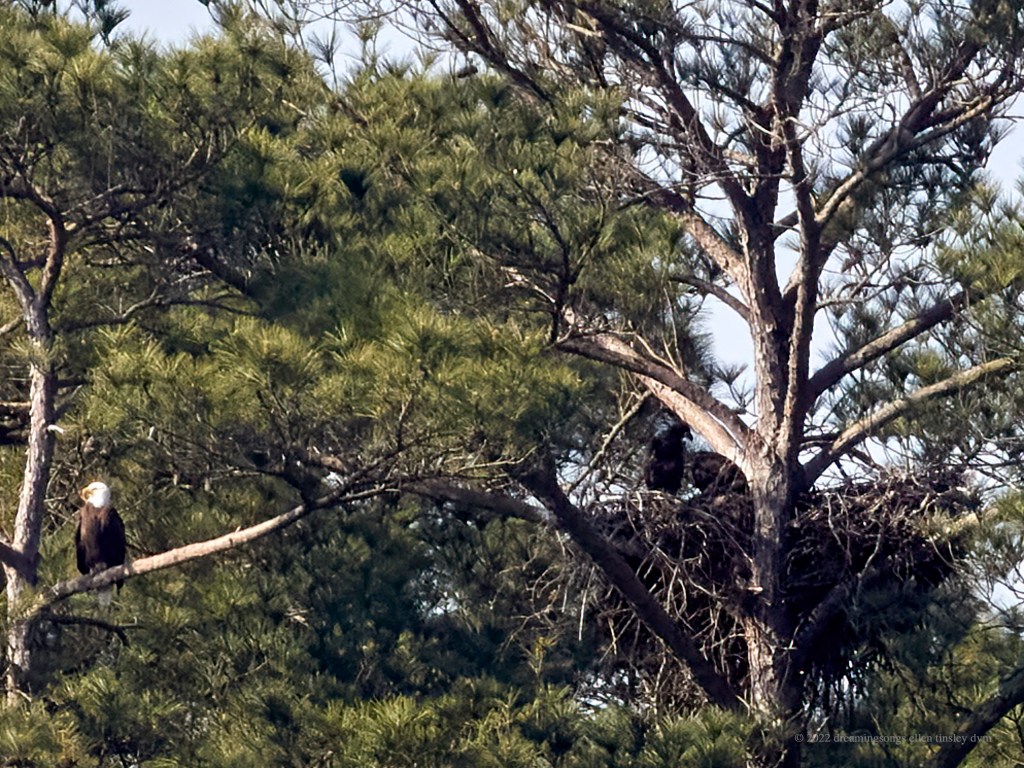
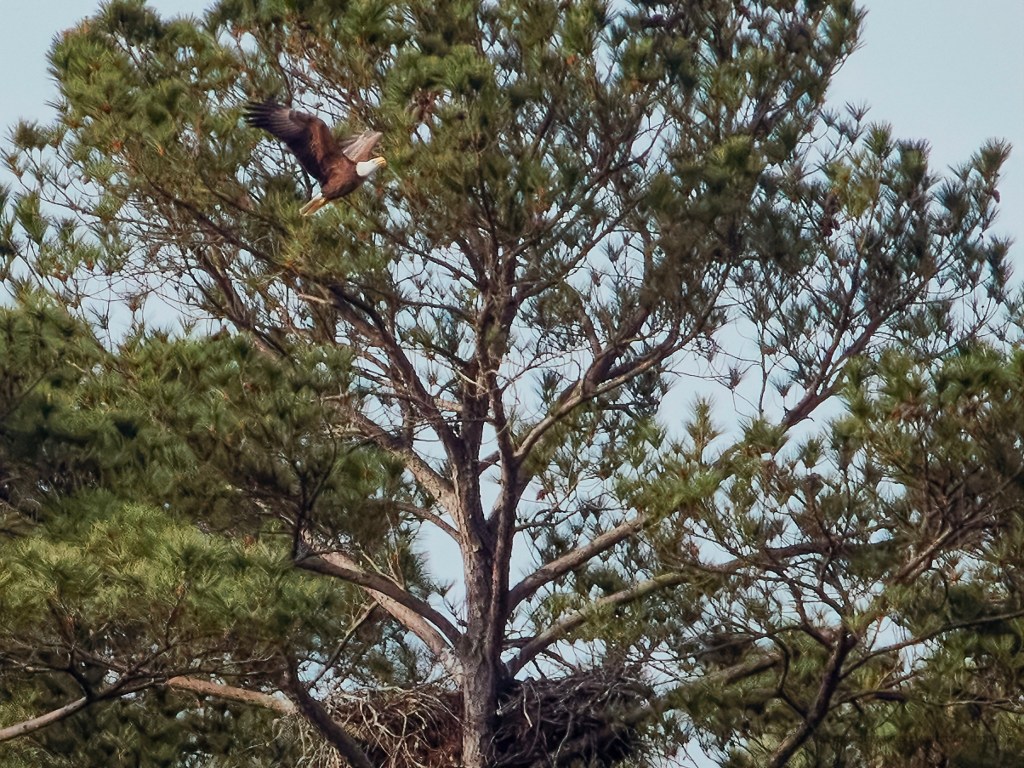
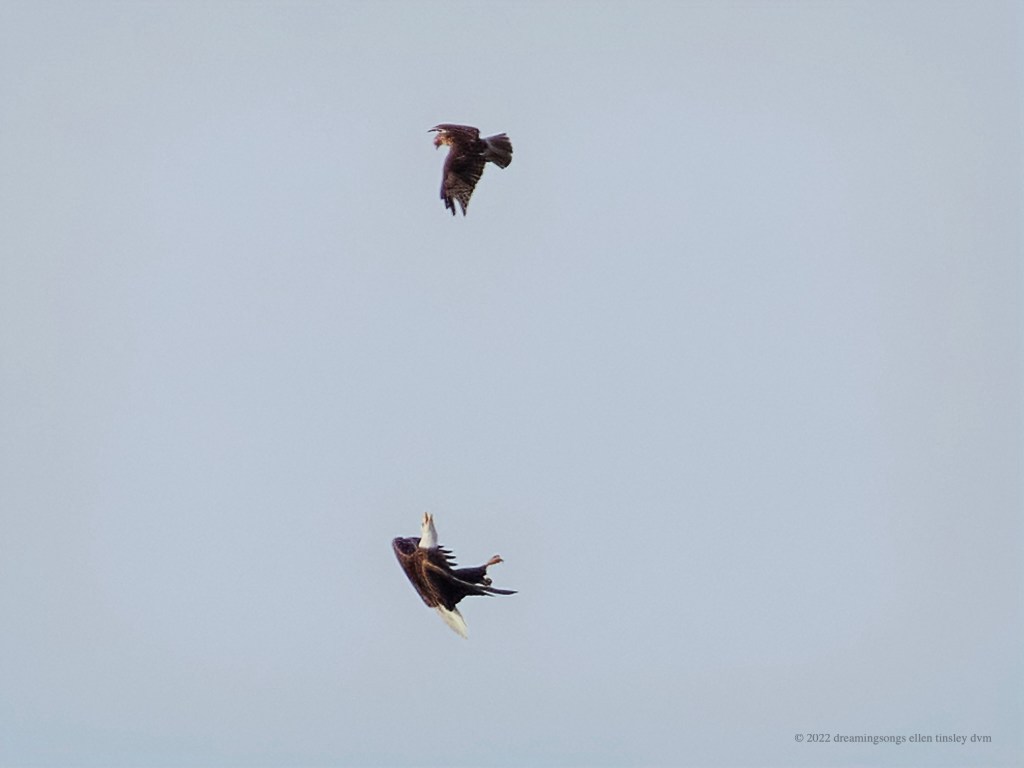
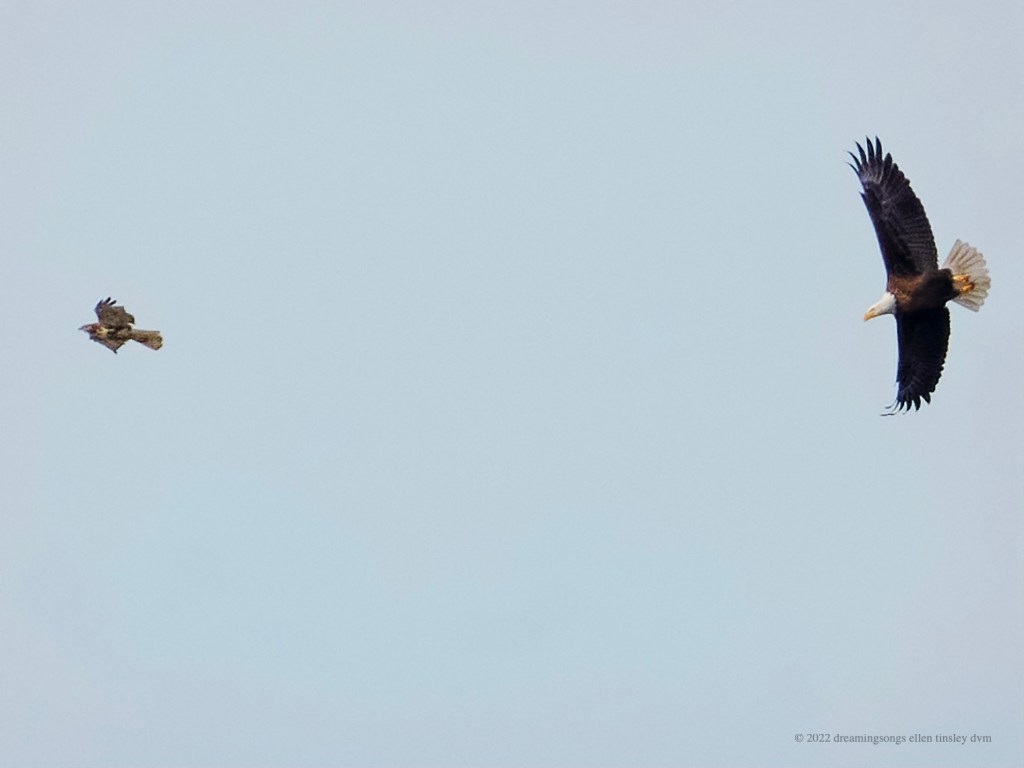
Jordan Lake. H&G bald eagle nest. I heard dad Hershey yelling. Looked up to see dad go right over the top of his nest. I couldn’t see any chicks in the nest because the alarm called by their dad had sent them down to hide. Dad Hershey was chasing another bird. I blinked. The bald eagle was chasing a red-tailed hawk. That red-tailed hawk is smaller than the eagle chicks are at this point and is no danger to them. Dad was simply agitated and wanted to make sure that the hawk stayed out of bald eagle territory.
Dad Hershey and his nestDad Hershey and a Red-tailed Hawk
Bald Eagles are at risk due to Avian Flu. The avian influenza has been detected in NC commercial poultry flocks - likely brought into the area by wild birds. I have not yet observed or been notified of any cases of Avian Flu here at Jordan Lake.
I would advise anyone that finds an eagle on the ground incapacitated or dead, not to touch it and to immediately call the NC Wildlife Resource Commission at 1 (800) 662-7137. Anyone touching the sick eagle can spread the virus to their hands, clothes, etc. I am not as worried about a human getting the avian flu (so far it has not transmitted from bird to human) but any contamination you might get on yourself - hands, clothes, shoes, rubber gloves - can too easily transfer from you to say your bird feeders, etc. at home. Best to let the personnel with the proper protection and protocol pick up the bird.





 doc ellen's journey