First Nest
HC has fledged!!
He took has first flight sometime between Wednesday and today.
In the video clip you can see his indecision:
food or the lure of flight.

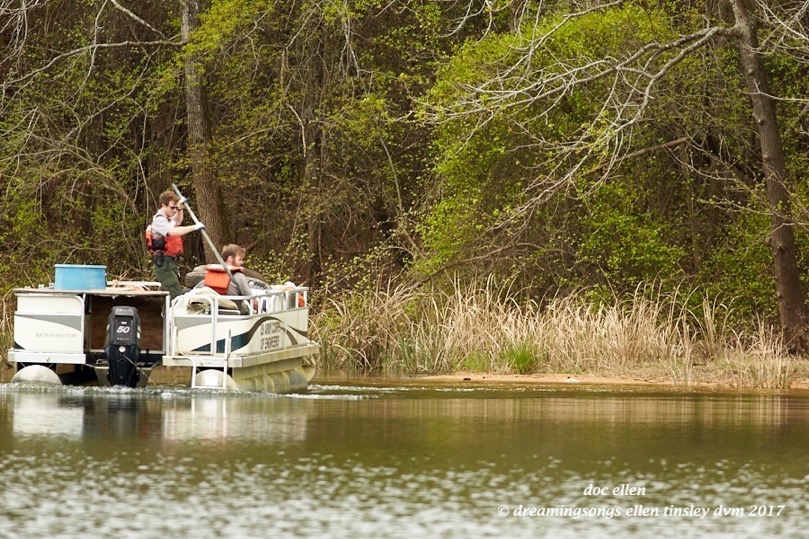
I want to thank the Army Corps of Engineers for helping First Nest today.
Some materials had been left on the shore very close to the nest and needed to be moved before the rains of the coming week.
Jon Bannerman and Blake Johnson of ACE called me and we talked through a quiet, slow approach and pickup.
The eagle chick HC had begun branching today and this is a very critical time for a chick.
If a branching chick gets startled he thinks he can fly, but the chick doesn’t yet have the needed wing strength.
At this point the chick has only been hopping from branch to branch and if he spooks and tries to fly he will often fall instead.
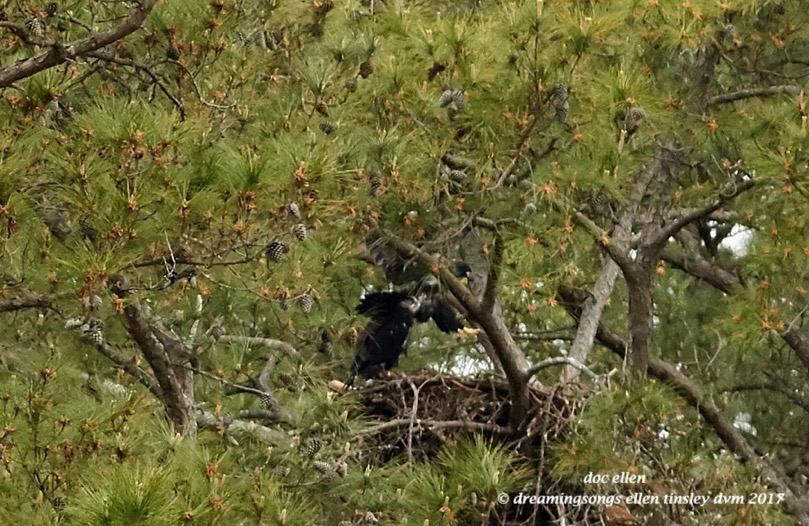
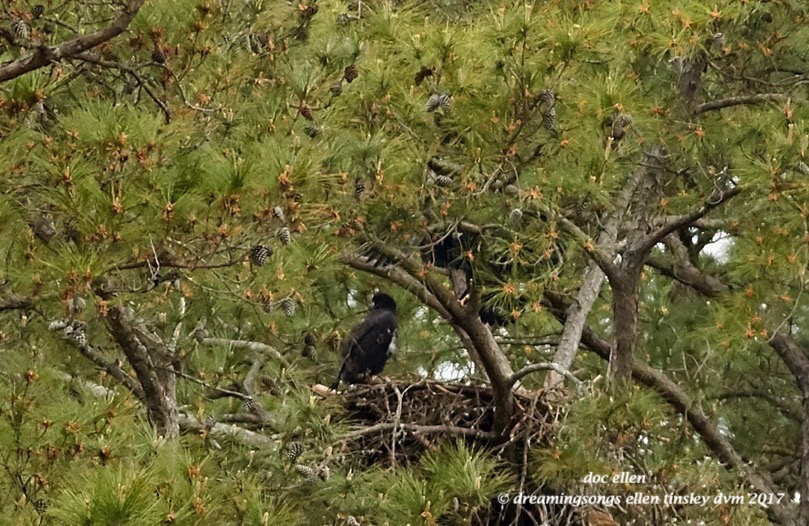
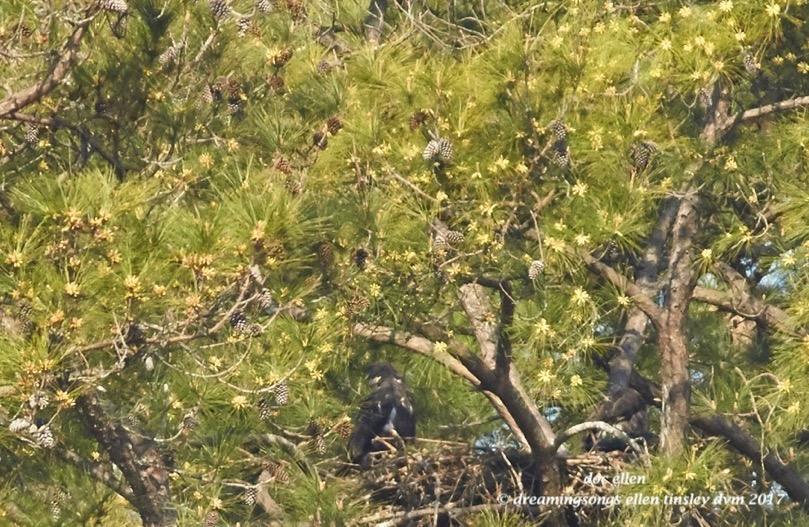
As you can see in the 1st photo, Coffee on the left and H C on the right, watched ACE approach, 2nd photo.
The chicks stayed attentive and inquisitive, but because ACE was quiet and slow, the chicks stayed in the nest.
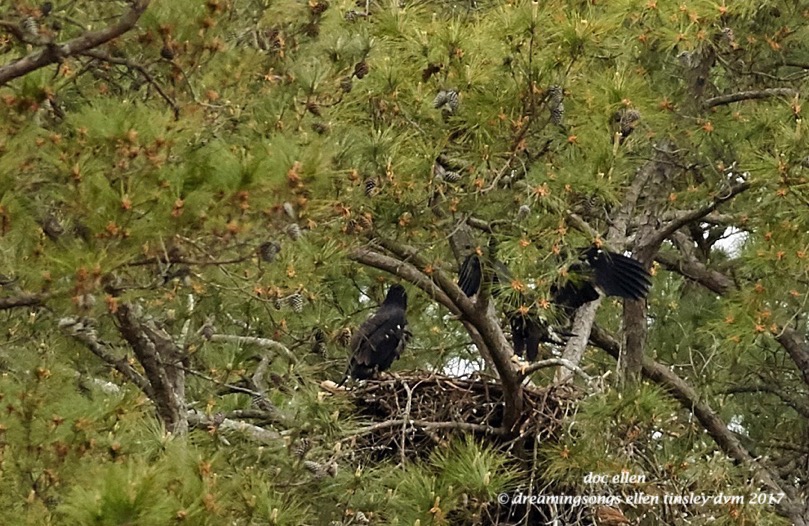
As ACE left, H C went back to branching, photos 3-6. Watch for his orange feet to follow his movements.


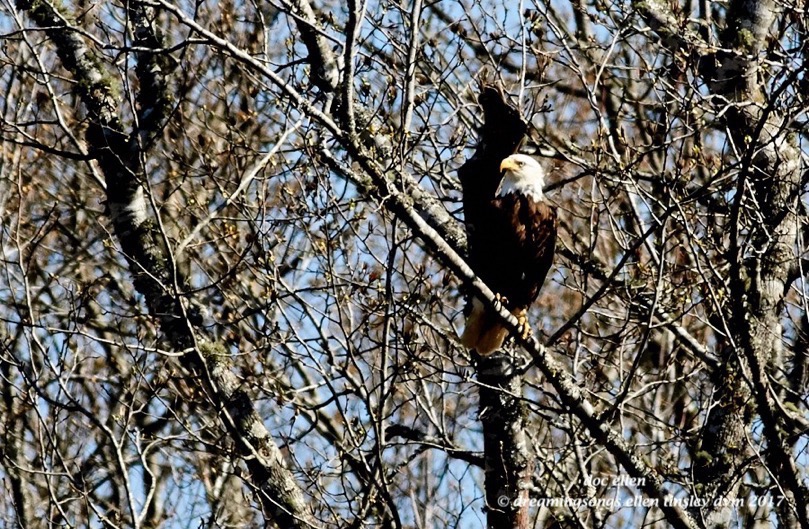
Eagles are proud and mighty…and sometimes embarrassed by the smaller beings at the lake.
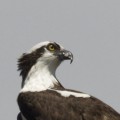
That streak is an osprey on a mission. The male osprey took on Hershey,
perhaps to prove he was the best mate for the female osprey who was hovering nearby.
I am celebrating: several decades ago, on March 24, my parents gave life and breath to me. They taught me to care for the Creator and creation. The joy I have in sharing my work with all of you comes from them. I miss my parents Hubert and Lucille Tinsley, but hopefully they live on in my efforts to bring a sampling of the vibrant life around me to each of you.

 doc ellen's journey