First Bald Eagle Sighting
A walker came to the dam this morning with her two dogs.
She asked what I and my friend were trying to photograph.
I replied that I would photograph any thing that caught my eye, including bald eagles.
She smiled and said she would like to see a bald eagle because she had never seen one.
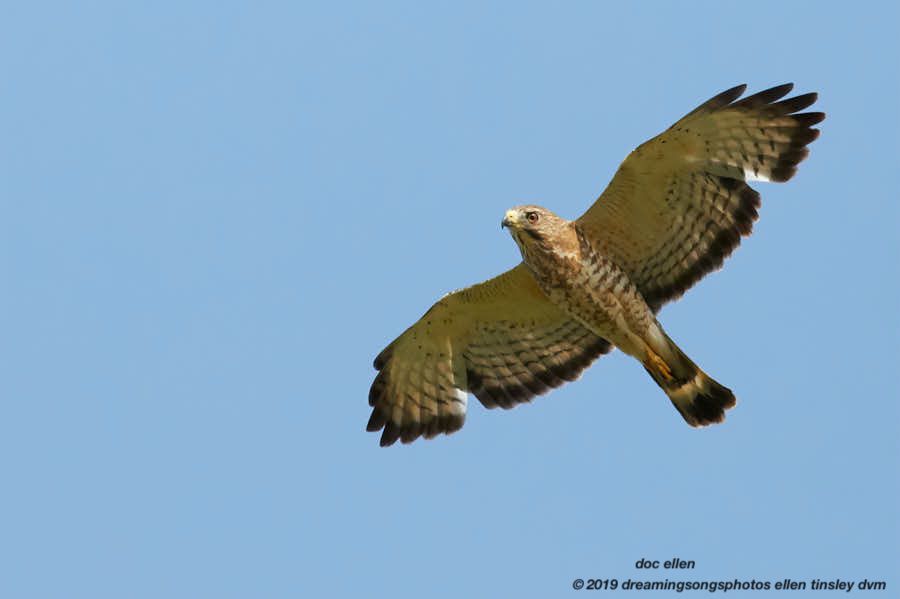
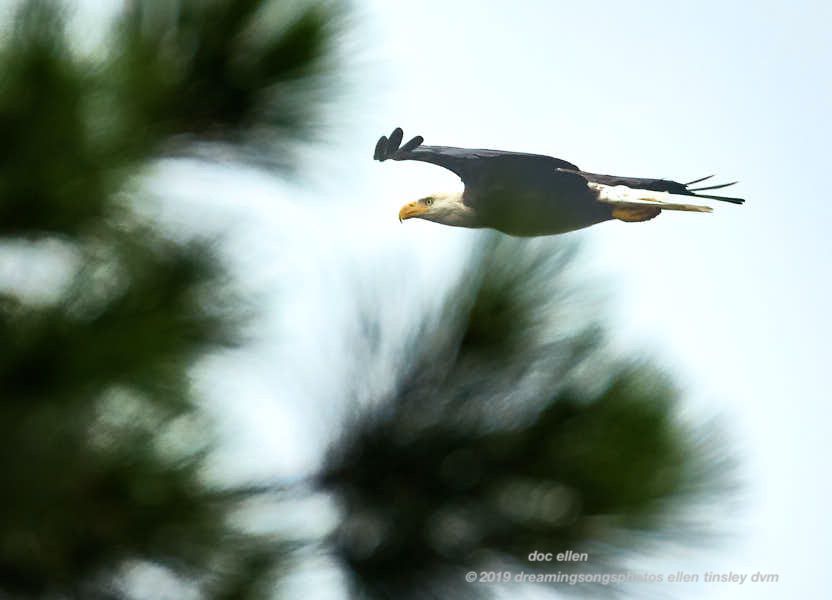
As we talked, I glanced up, and yes, the eagle below came flying over us.
I swung my camera toward the eagle and told the lady to look.
There was a long silence as the realization of what she had seen took hold.
The dear lady agreed with me when I said we had all just been blessed.
Jordan Lake Dam: June Flight Jamboree!!
Sunday morning was cool and bright. All the feathers in flight glittered with life.
Parent birds. Juveniles. Big birds and small ones.


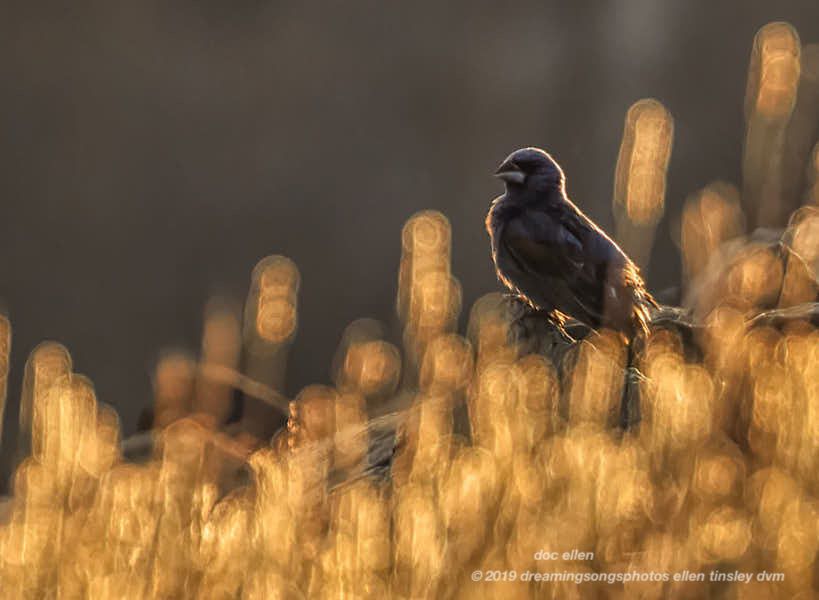
1) Northern Cardinal, male juvenile
2) Blue Grosbeak
3) Common Grackle
4) Brown-headed Cowbird
5) Fish Crow
6) Great Crested Flycatchers, juveniles
7) Eastern Bluebird
8) Osprey
9) Summer Tanager

Hawks at Jordan Dam Today; Whew, 3 species!!!!!
I had spent all winter trying to get a photo of the first hawk in this group of Buteo hawks.
Buteo hawks are all called broad-winged hawks which is confusing because in the group there is a Broad-Winged Hawk!
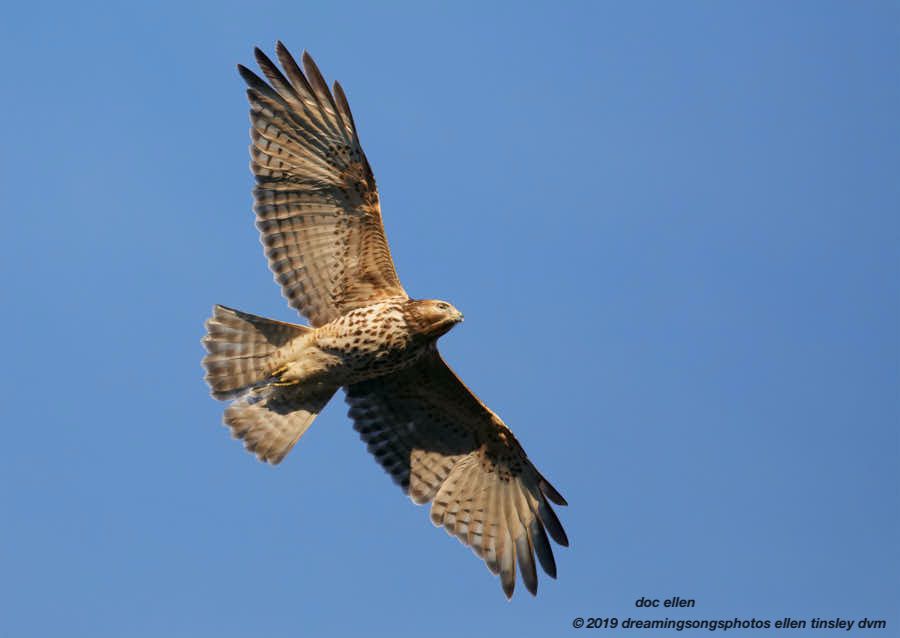
This morning a medium-sized hawk appeared from the hill above the dam: it was my elusive Broad-winged hawk.
Broad-winged Hawk
Often confused with the red-shouldered hawk and even though it is fairly common,
is dismissed as a red-shouldered hawk and we don’t look twice.
Note the broad white tail stripe and the distinct black band that edges the trailing edge of the wing from wing-tips to body.
Red-shouldered Hawk
Looks very similar doesn’t it! But this hawk doesn’t have the broad black band lining the trailing edge of the wing.
BTW this is a juvenile; the other 2 hawks in this group are adults and that can add to the identification problems.
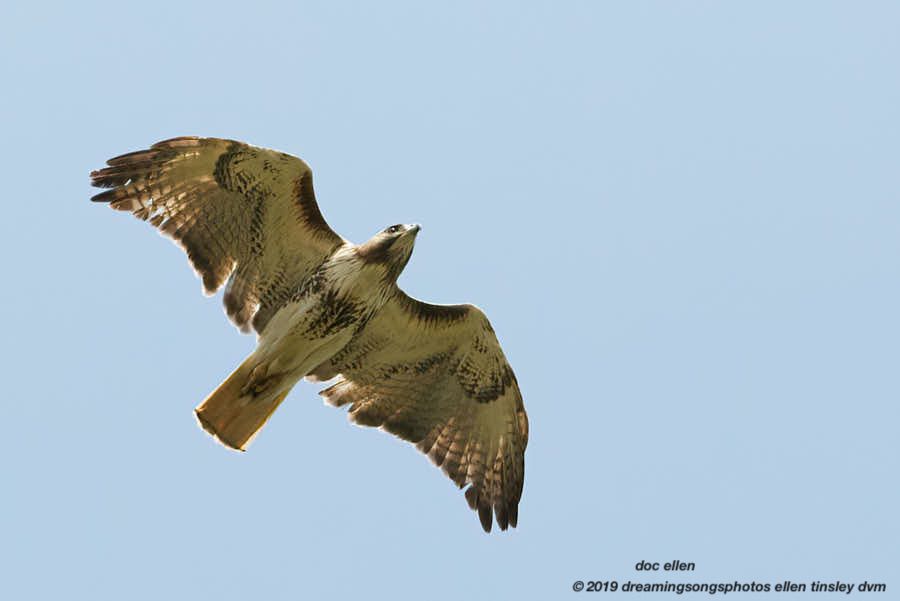
Red-tailed Hawk
All 3 birds are similar, in part because of the body shape and broad-wings.
Look back at the wings of all three hawks.
Note just how much distance there is from leading edge to trailing edge of the wing: BROAD WINGS indeed!