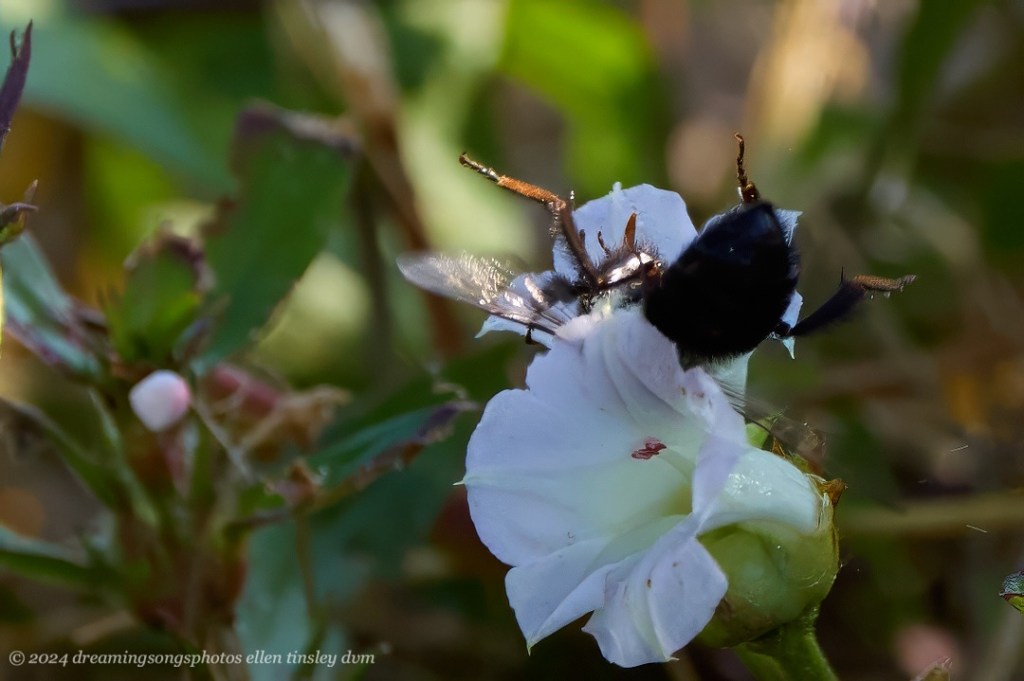
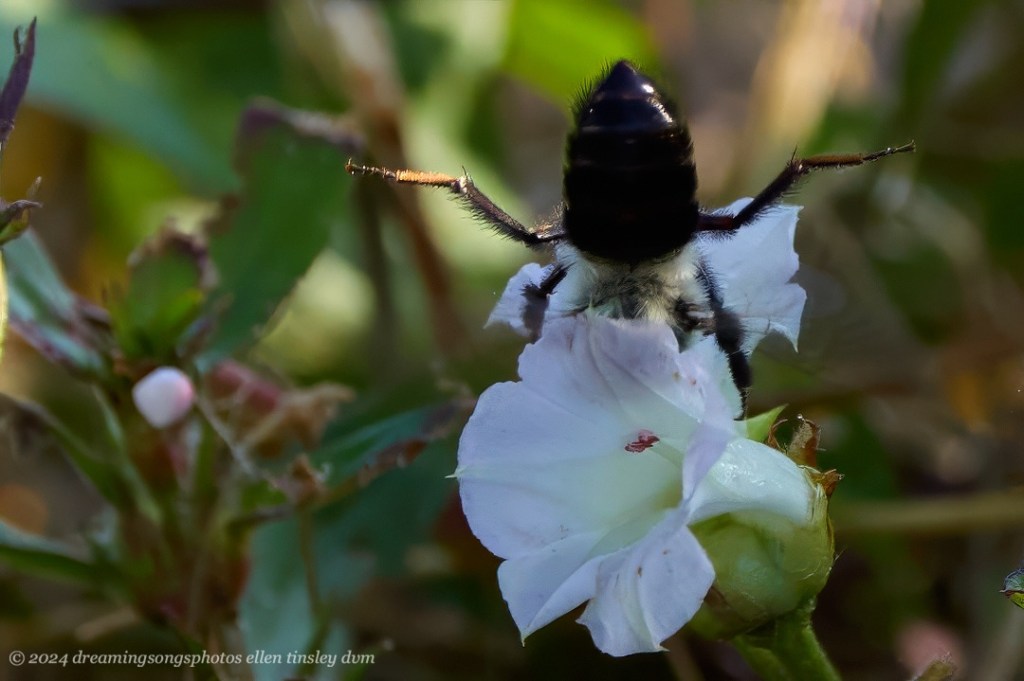
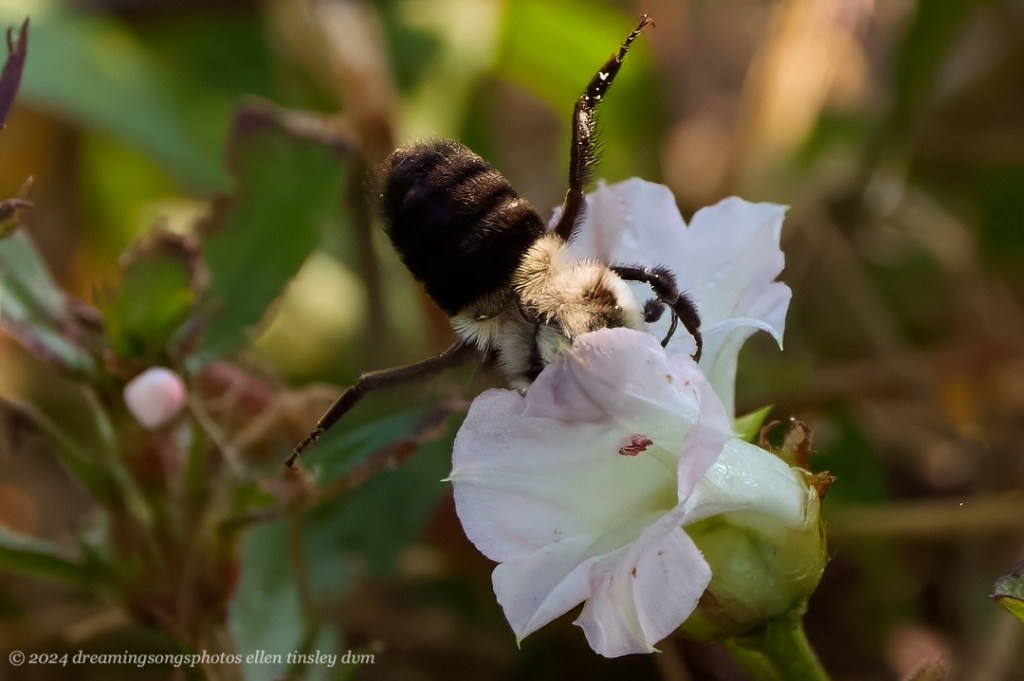
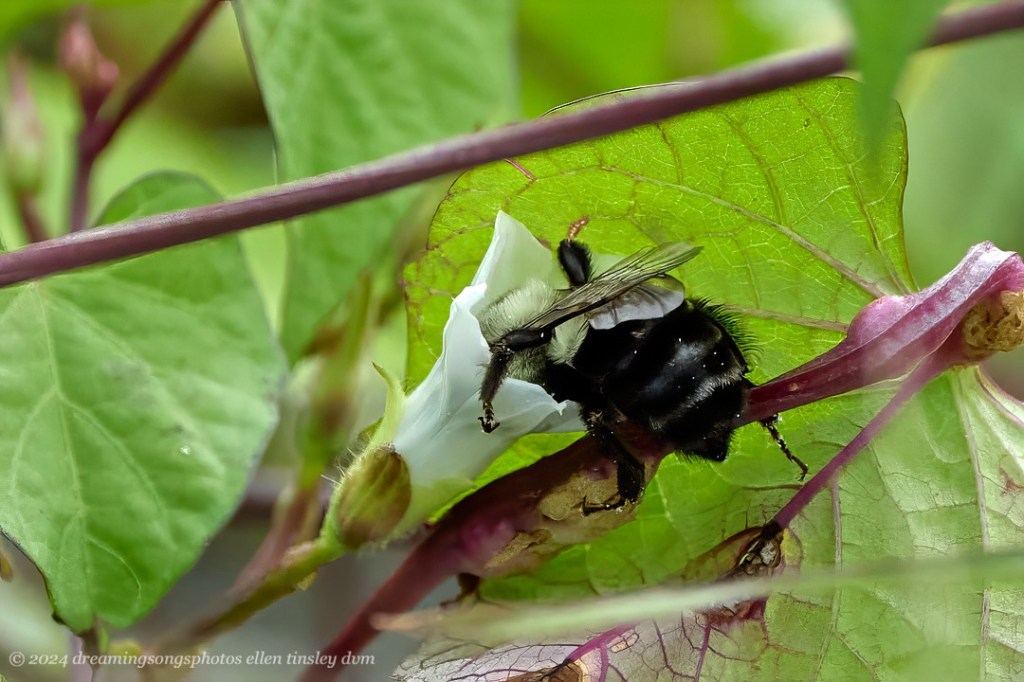
Jordan Lake. The phrase “busy as a bee” certainly came to my mind as I watched this common eastern bumblebee literally stuff herself into the blossom of a whitestar morning glory. As you can see the bee was almost bigger than the blossom! Her enthusiasm is certainly on display. BTW the tiny whitestar is a native wildflower.
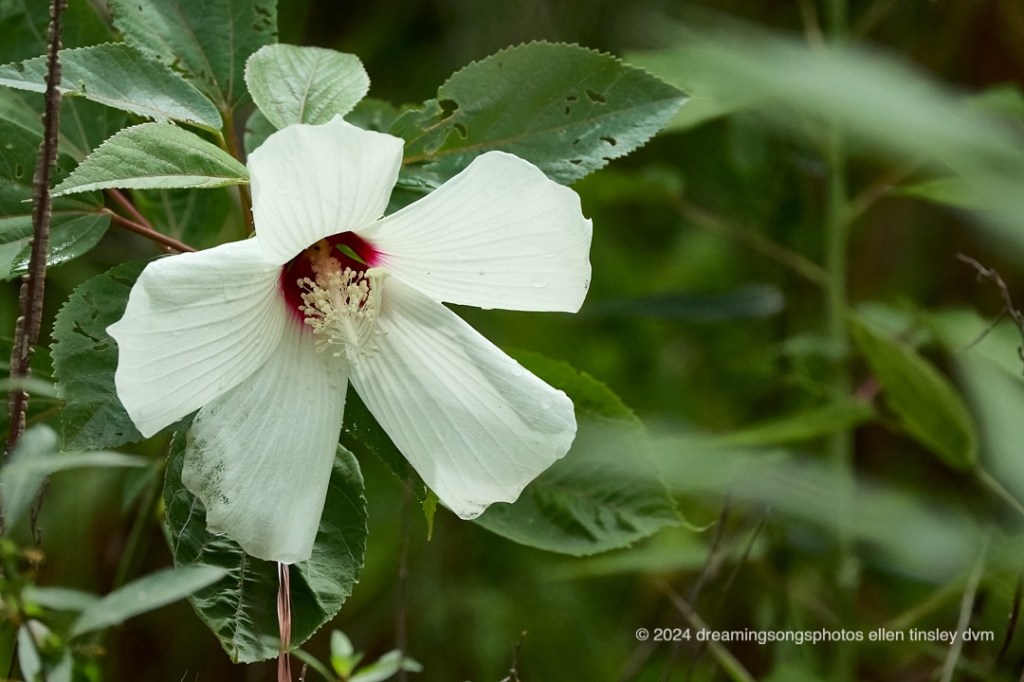
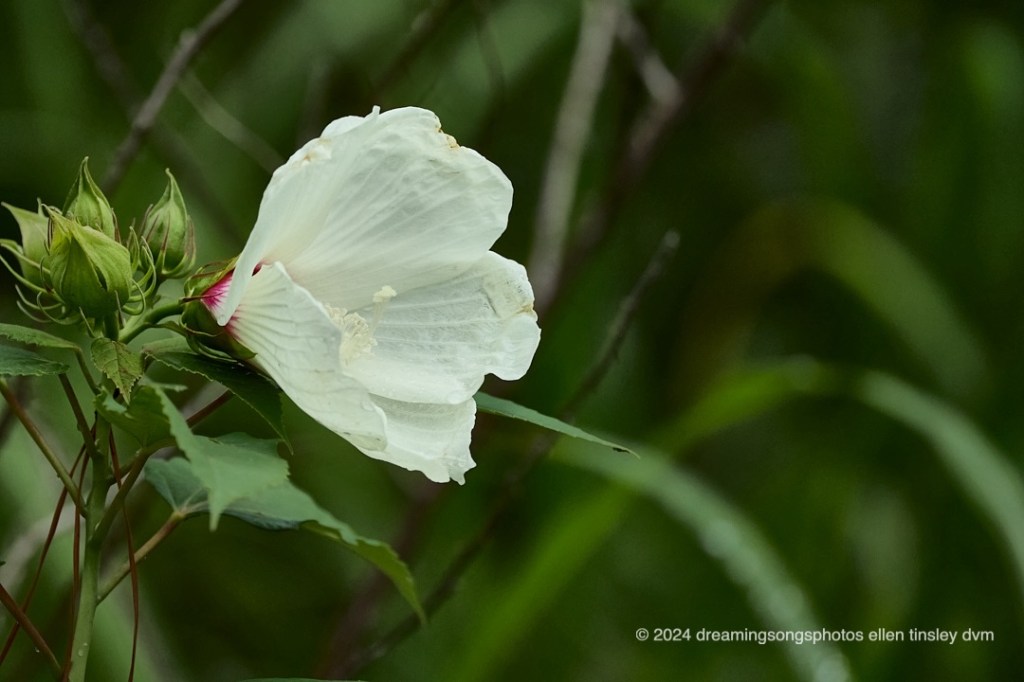
Jordan Lake. The crimson-eyed rose-mallows are blooming. This blossom may look familiar – especially if you have ever grown okra. However this is not okra but it is a relative and both plants are hibiscus varieties. Like okra, the rose-mallow is edible although I’ve never tasted it. The crimson-eyed rose-mallow is native to North America while the okra originated somewhere in Africa.
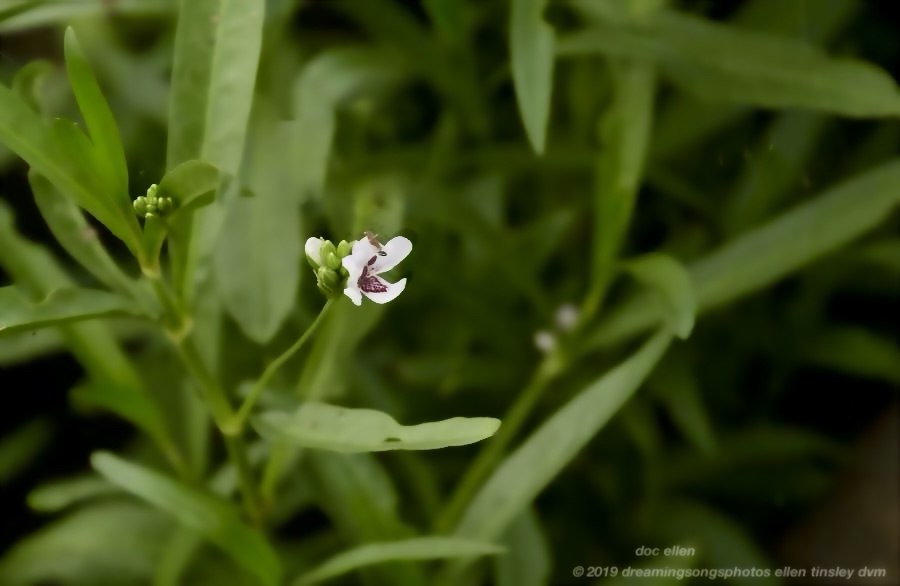
Jordan Lake. This is a patch of the native wildflower the American water willow that is dancing in the rippling waters of the lake. Sometimes I need a minute or even two of serenity. So I thought I would share a couple of minutes from this morning at the lake with all of you.
Jordan Lake. Great blue herons really enjoy standing still within a garden of American water willows. Fish love to get in around the stems of the American water willow which of course means it’s a good place for a great blue heron to look for food. The American water willow’s blossom reminds me somewhat of a tiny iris. You can find them at some of the boat ramps on Jordan Lake these days. Go and enjoy this native plant.
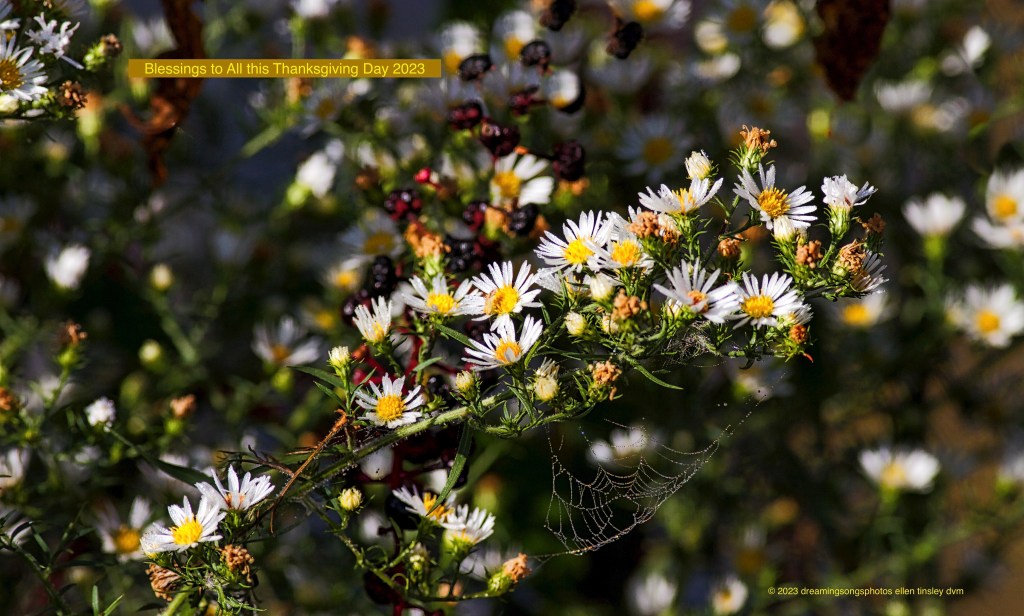
The hairy white oldfield aster is a native to the eastern US. It blooms midsummer through midfall. It makes a joyous splash of brightness against the autumn background. May each of you have a blessed day! Doc Ellen
Jordan Lake Dam, Haw River: In the prior post, we looked at a whitestar morning-glory (native to NC) during the night, when it was resting and closed. In the growing daylight, the whitestar blossom begins to open. The blossom is almost irresistible to the eastern bumblebee. The bumblebee is just a little bit smaller than the wee whitestar blossom. There is an advantage to the whitestar in this tight fit. As the bumblebee wedges itself down into the flower, to reach the nectar, the insect picks up the pollen of the whitestar. The bumblebee backs out, carrying her load of pollen and heads for the next blossom. Pollination for the flower and nutrition for the bumblebee! The eastern bumblebee narrates her story and I think she does a fine job…

 doc ellen's journey