This is the hollering juvenile female osprey that was in my post a while ago. I just got back to scanning that day’s work. We can all see why she was screaming. The chunk of fish tightly grasped in her right talons was what she was protecting! BTW average wingspan of an osprey is 5-6ft.

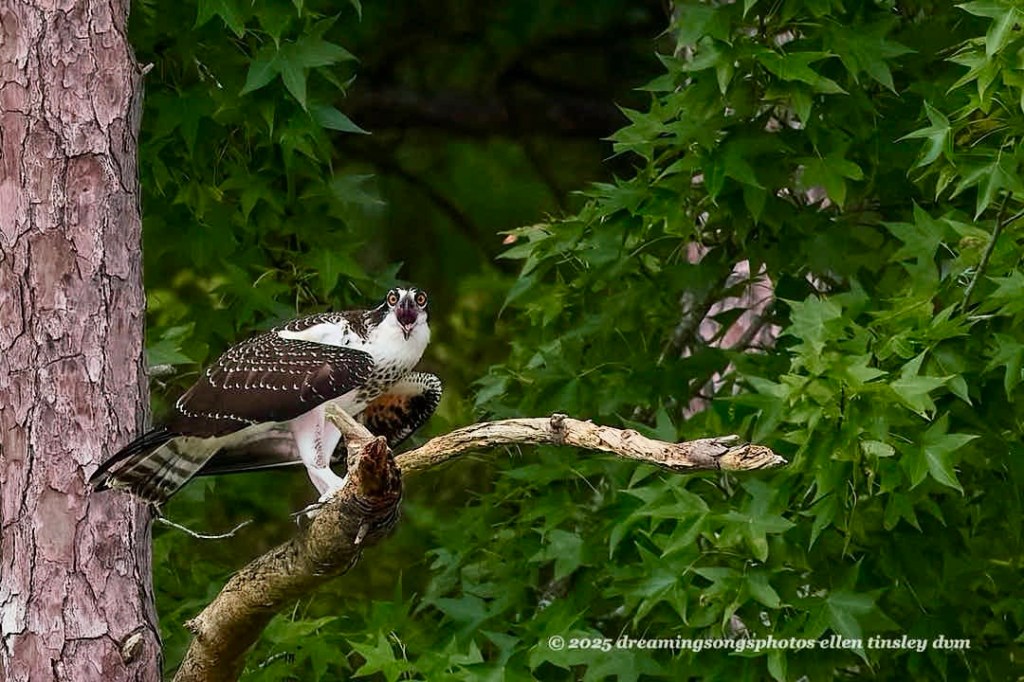
juvenile female osprey

Today I want to give you a close look at the eye color of the juvenile osprey. The eye is a bright orange. Note the white points on the flight feathers of a juvenile. I know that she is a female by the broad brown chest band she has (some females only have a single line of dots) – this young lady has a beautiful necklace.

female juvenile osprey

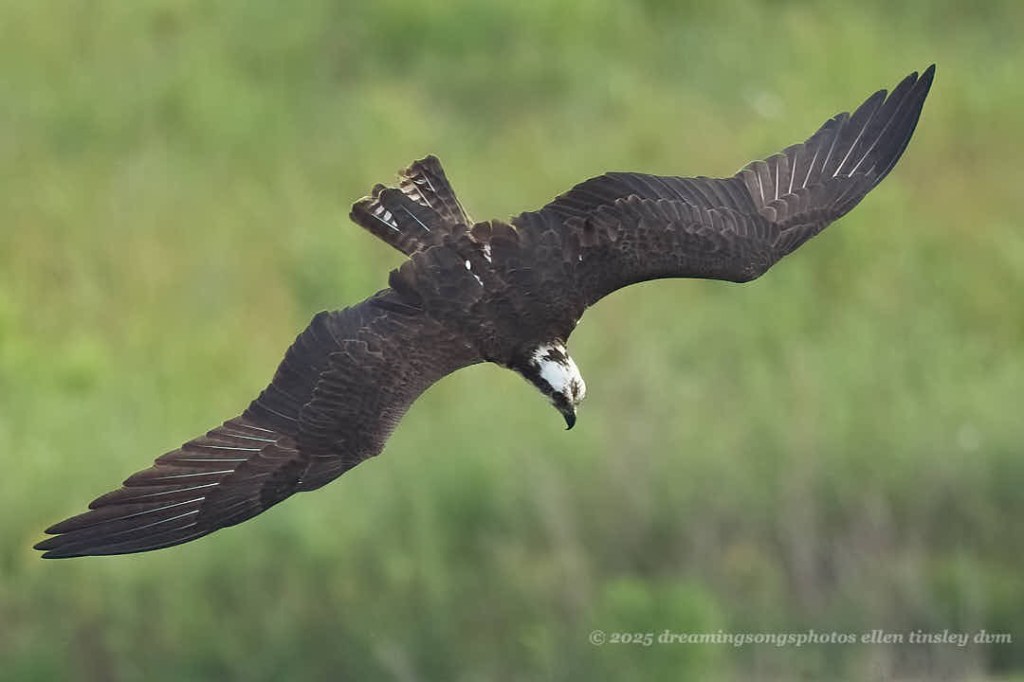
When you cannot get close enough to an osprey to see its eye color (red/orange fledgling & yellow adult), especially in flight, and you want to know is it an adult or a fledgling. Take a look at the back of the bird! Fledgling has white points at the end of all of its feathers! Adult has beautiful brown flight feathers. 2 photos (adult left, fledgling right) so you can see the difference! Moncure, July 2025 & August 2014

adult osprey
fledgling osprey

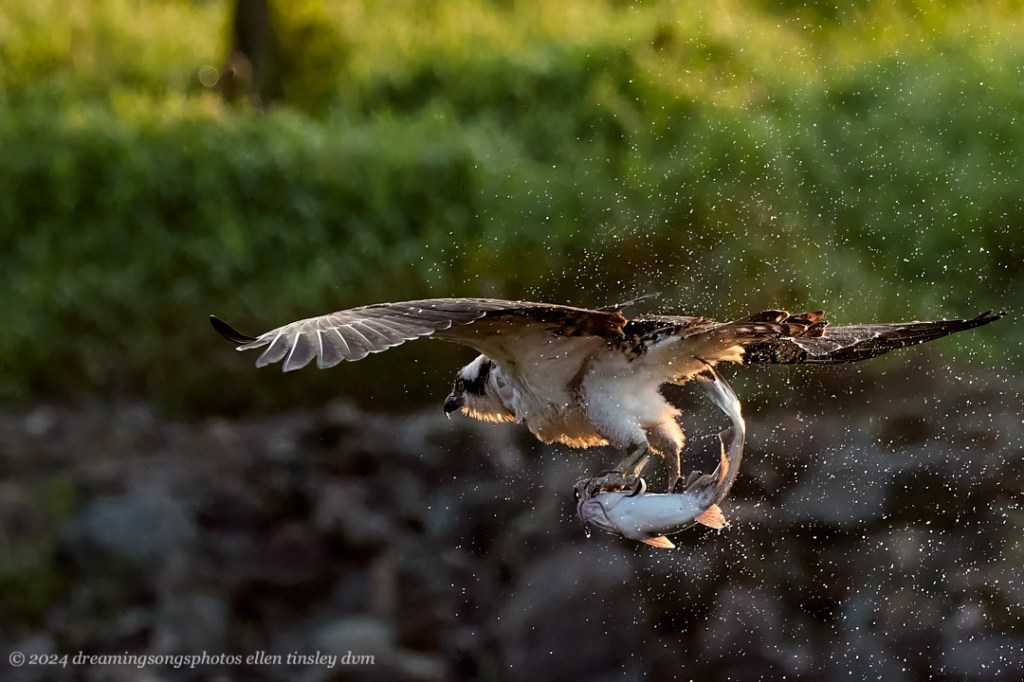
It certainly is fun to watch a fledgling osprey catch its fish and then shake all the excess water off of its feathers. The fledglings are working hard and eating as much as they can because the migration journey to South America is not too far down the road. Some of the adult ospreys have already headed south.

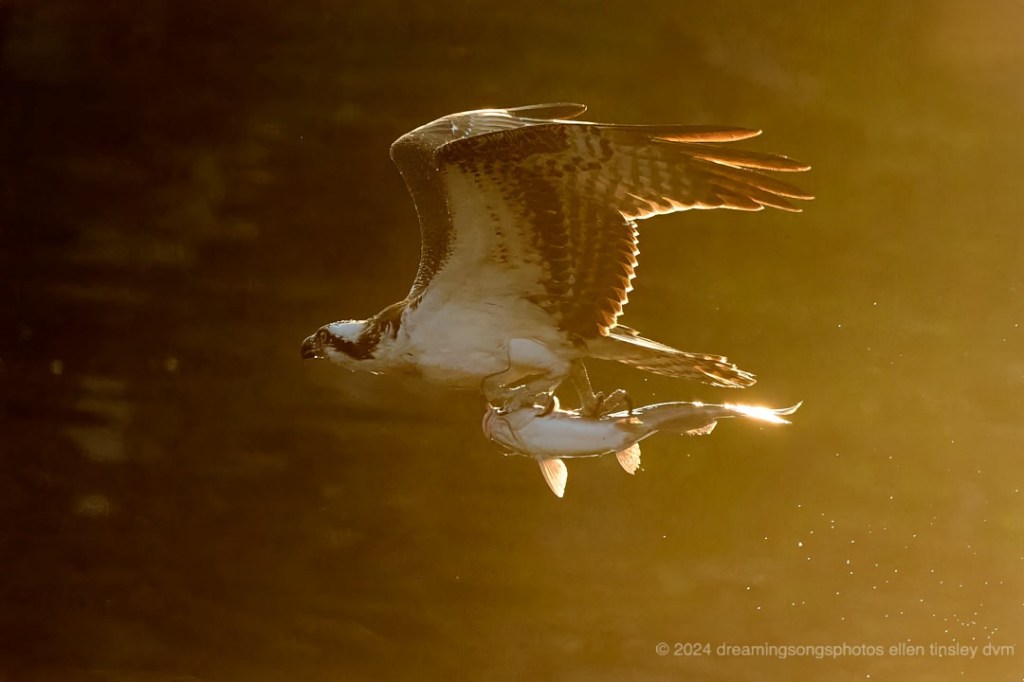
Jordan Lake. This fledgling osprey and his catfish catch certainly show the glory of the morning golden hour. In photography the golden “hour” is the short moment of time just after sunrise or just before sunset when the light is infused with red and gold tones.