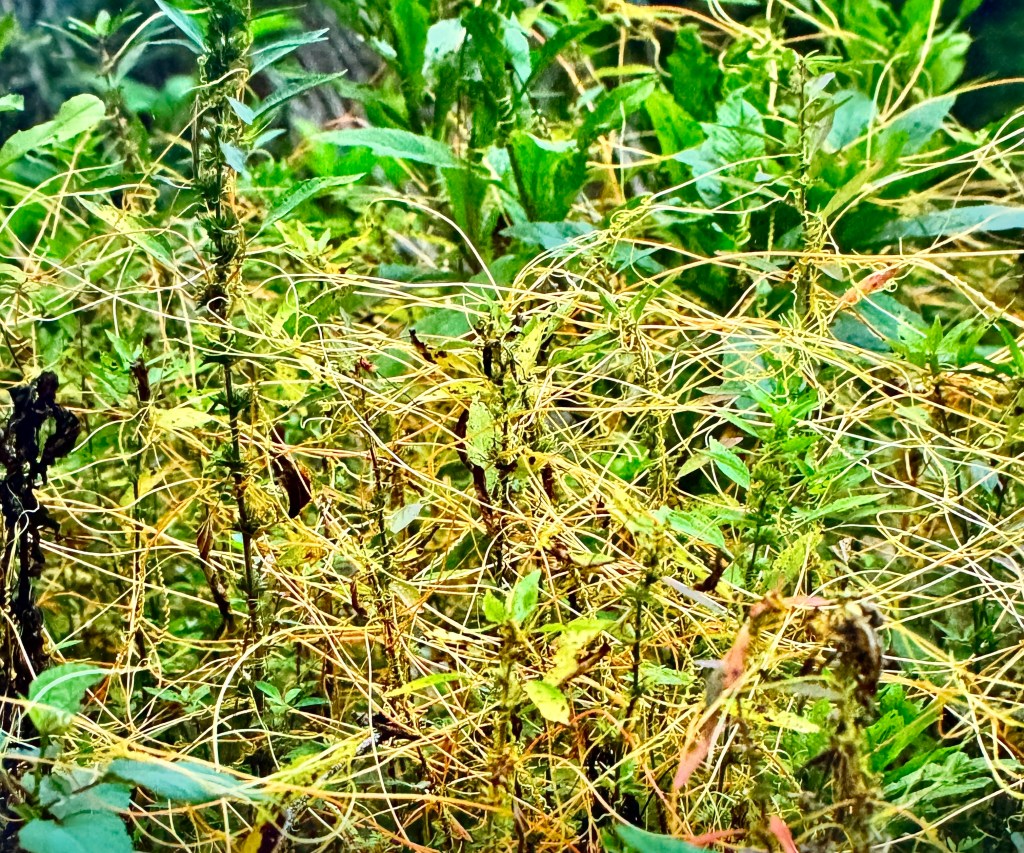
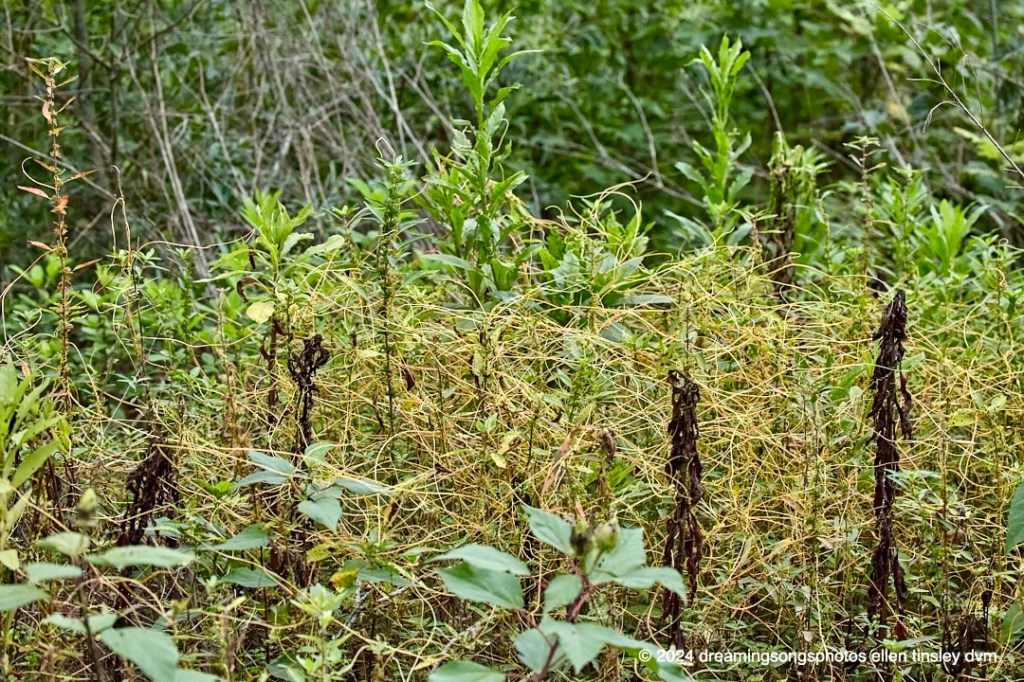
Jordan Lake. No, that is not tangled up twine left by a careless person. Those yellow orange strands belong to the dodder plant. Dodders are parasitic plants. They start off with roots in the ground but soon lose those roots because along those thin strands are developed sucking roots. Those sucking roots actually penetrate their host plant and draw out the nutrients that the dodder needs. Sometimes dodder is a problem as in blueberry fields. Sometimes it is not. But it is a curiosity and I thought y’all might like to see another kind of wildflower … a parasitic plant that happens to be in the morning glory family. Very interesting isn’t it.
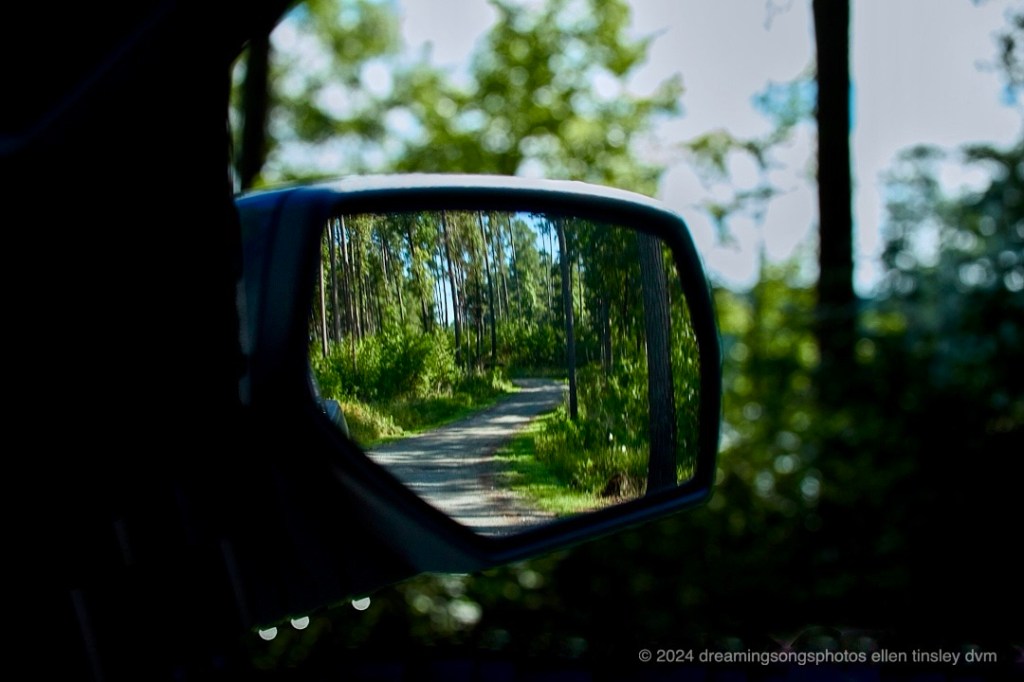
Jordan Lake. I am glad that Lapis Lazuli, my Chevy truck, sees so clearly our paths as we wander the Jordan Lake Neighborhood. She makes the paths easy and full of wonderment about what we will next see. Lapis is a steady sturdy companion!

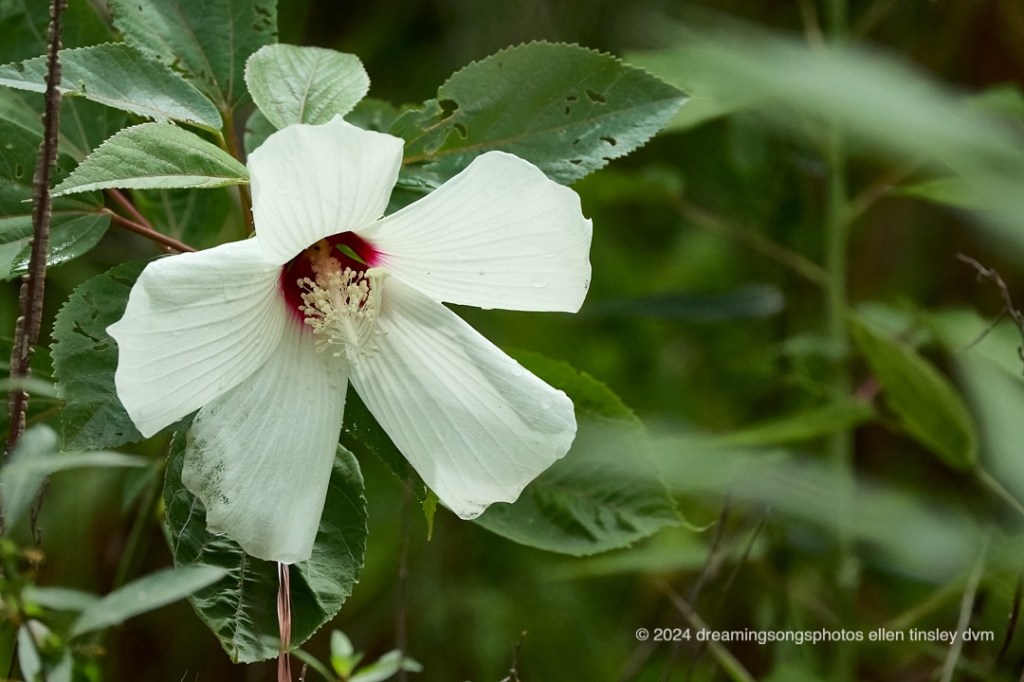
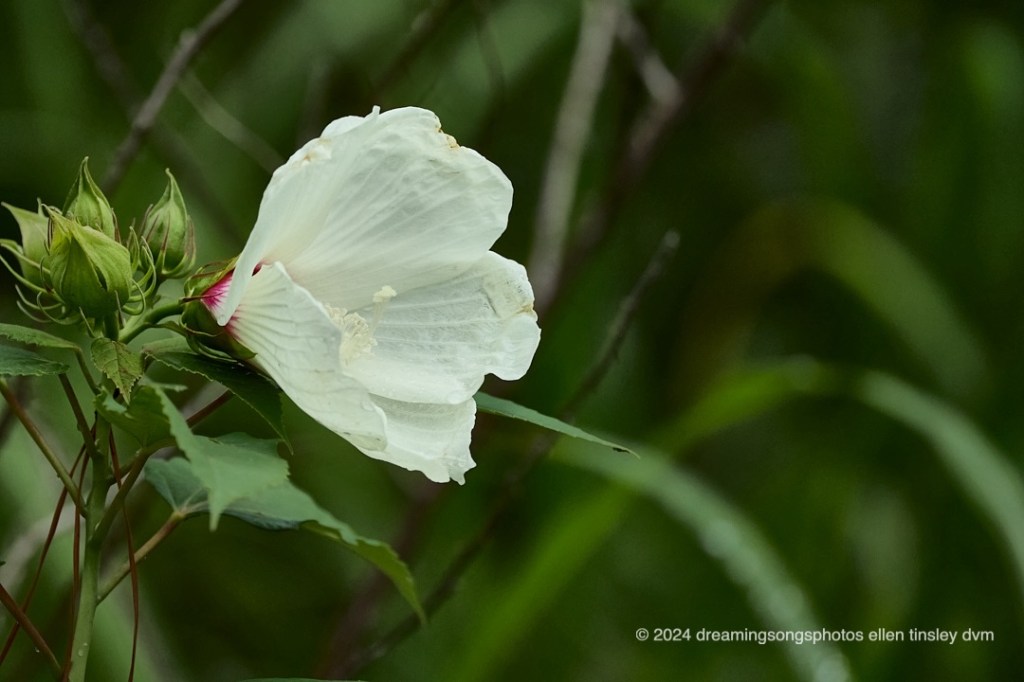
Jordan Lake. The crimson-eyed rose-mallows are blooming. This blossom may look familiar – especially if you have ever grown okra. However this is not okra but it is a relative and both plants are hibiscus varieties. Like okra, the rose-mallow is edible although I’ve never tasted it. The crimson-eyed rose-mallow is native to North America while the okra originated somewhere in Africa.

Jordan Lake. Oh, it is still hot! The eastern cottontail rabbit, however, has a very neat way to stay cool. Rabbits cannot sweat, so how do they get rid of excess heat? You see those big long ears? If you look carefully you can see the blood vessels coursing through those ears. Those vessels bring the too warm blood up close to the surface of the ears and there the body heat transfers out into the air and the now cooler blood returns to the body. Another way to keep cool in all of this very hot weather.