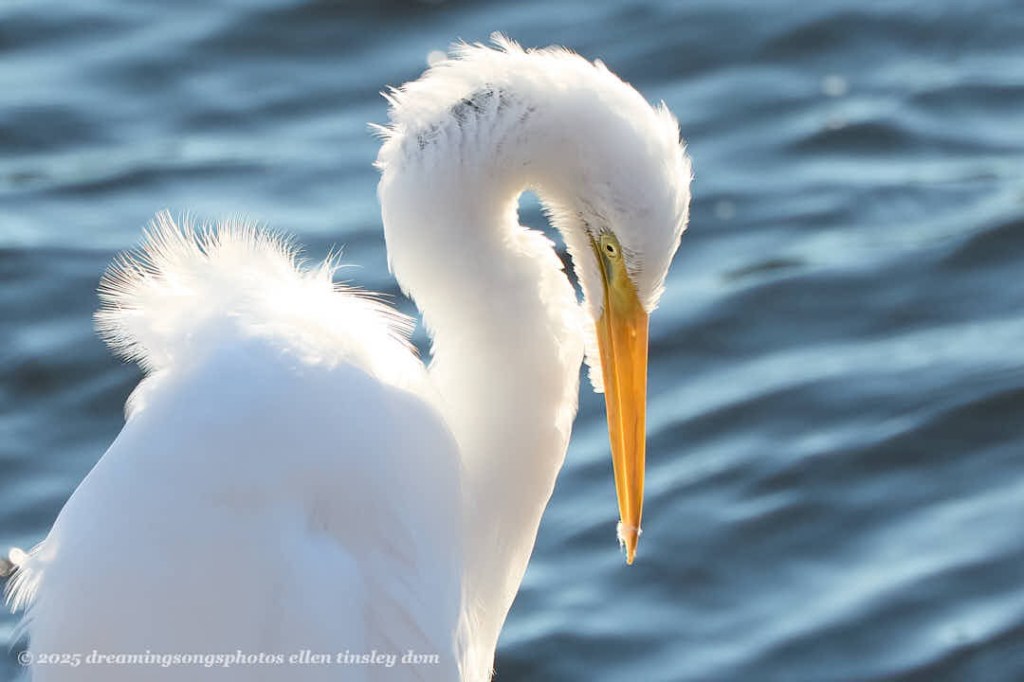
Egrets and herons, on their middle toes, have a special edge that acts like a comb. They use this pectinate edge to reach up into the special soft feathers on their chest and gather up some of the extra fine fluff that lingers there. Placing the fluff in their beaks it becomes a wash cloth to help clean all the fishy leftovers from their feathers. Here you can see some of that fluff at the end of the beak of this great egret.
great egret

Often when we have a hurricane actually on shore or close to shore – such as hurricane Erin – a lot of the birds that live on the coastal areas are often pushed far inland. They show up in the Jordan Lake area. I have seen this happen with ibises, immature little blue herons and once even a stork. A lot of the smaller birds also show up such as different sandpipers. So if you get a chance, now through the next couple of days, go out and see what you can find. photo is a local great egret.

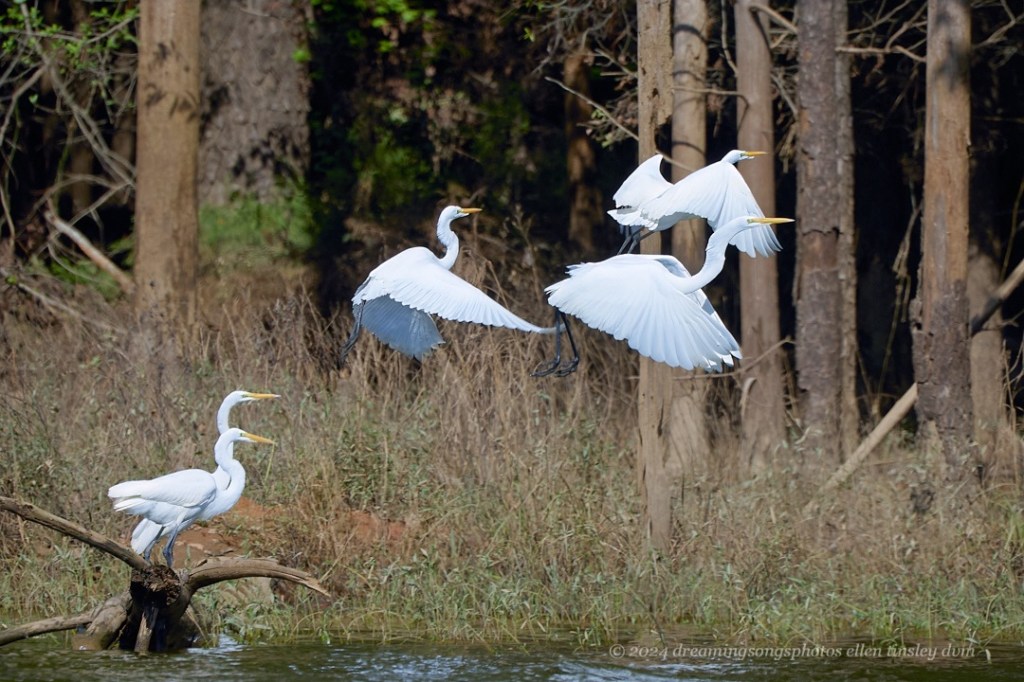
Quick survey of the breakfast flights at the Jordan Lake Dam tailrace riprap this morning. Just thought I would let y’all get a taste of how active the birds are being. At least three times I saw groups of 15 ospreys up in the air. There were 11 great egrets. 6 to 10 great blue herons. One green heron! If you get a chance, and even if you do not have binoculars or a telephoto lens, bring your chair and sit down at the riprap and just watch. The ospreys are fishing at the upper end of the river by the dam. I hope you get to go by and enjoy them.

Ospreys and Great Egrets

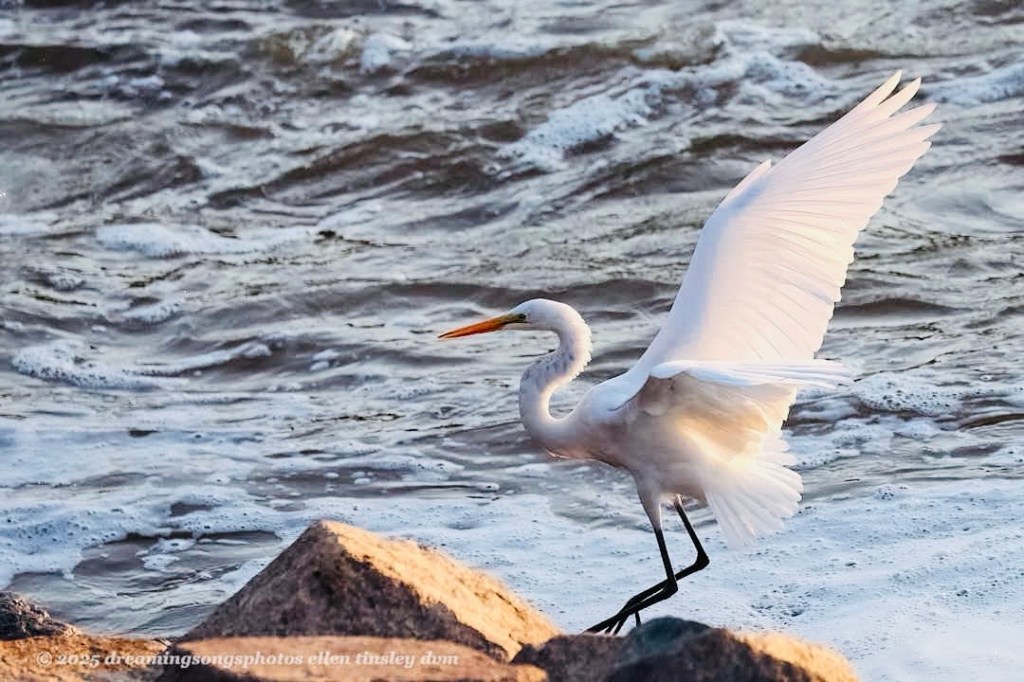
It was a few minutes after sunrise. The Haw River was thundering out from underneath the Jordan Lake dam. Across from me and down the riprap there were a total of 52 great egrets. This time of the year I’m used to seeing maybe two dozen at a time… but a whole 52 card deck of them? There were a few great blue herons in the mix. By 30 minutes after sunrise all but three of the great egrets had left the riprap.