Jordan Lake Dam, Haw River: the Kirtland’s warbler was still at the riprap this morning! I caught her feeding on protein packets, aka: spiders, mites, caterpillars and insects. She was quite busy and very intent on feeding up for the next leg of her journey flight to the Bahamas. About half-way through the slide show she gets a small critter of some sort and quickly swallows it and goes right back to hunting. I don’t know if the stormy weather tonight will send her on south or if she will stay another day or two. It was grand watching other birders get their first glimpse of a Kirtland’s warbler – a feast for my heart.
B. Everett Jordan Lake
TagRare Bird ALERT!
Jordan Lake Dam, Haw River: RARE bird alert! I photographed this female Kirtland’s warbler at the riprap this morning. It was removed from the federally endangered species list in 2019 and is still considered threatened with a global breeding population of about 3600 birds. It was passing through here from its breeding grounds in Michigan and heading for its wintering grounds in the Bahamas. A new life list bird for me!
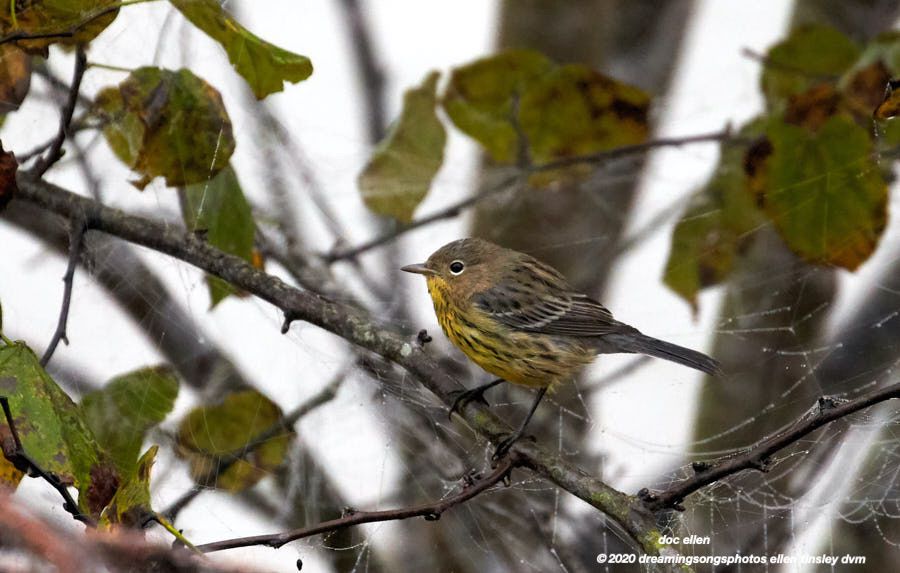

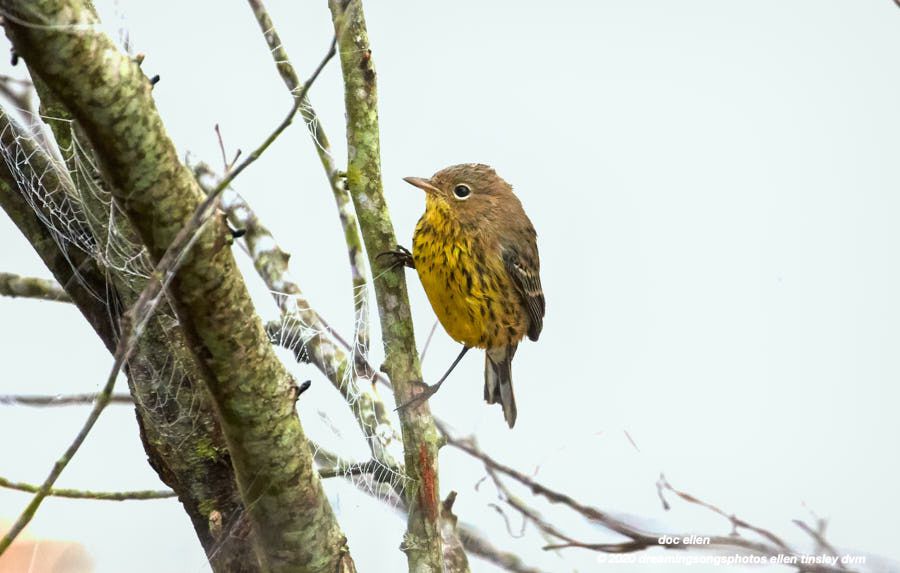
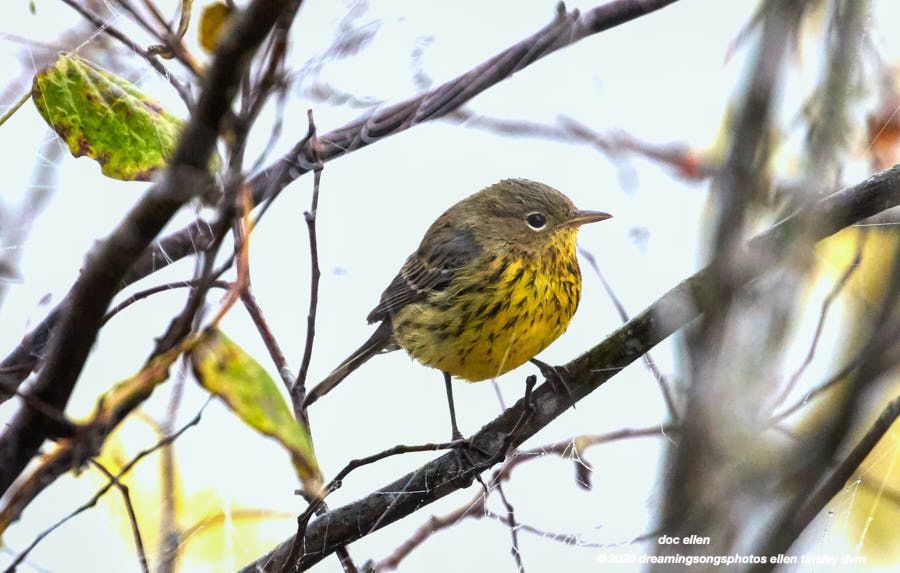
Photo Bomb!
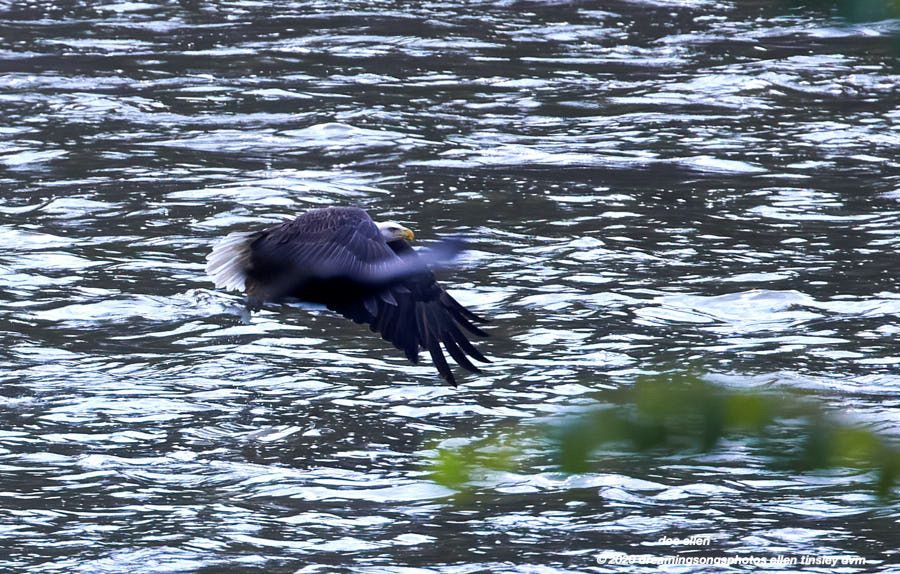
Jordan Lake Dam, Haw River: You know the saying “the best laid plans of mice and men (and photographers)? Photo bomb! Just as the bald eagle caught her fish, an American crow decided to zip along side of her. The crow did make a rather interesting abstract form that nicely framed the eagle.

Oh! Ouch! But, Good News!
Jordan Lake: On June 5, 2020, Captain Doug and I, while out on Jordan Lake, came across a great blue heron. He had somehow peeled his face from the corner of his beak to just in front of his eye. We both wondered if he would be able to heal. Captain Doug kept an eye out for the heron as the weeks went by, but didn’t see him. Then on September 16, 15 weeks later, we found the great blue heron. Eye still bright. Skin scarred around the eye and pulling it into an oval, but the bird looked just fine. Does have a very distinct look. Whew!!!
Feathered Kinetic Energy
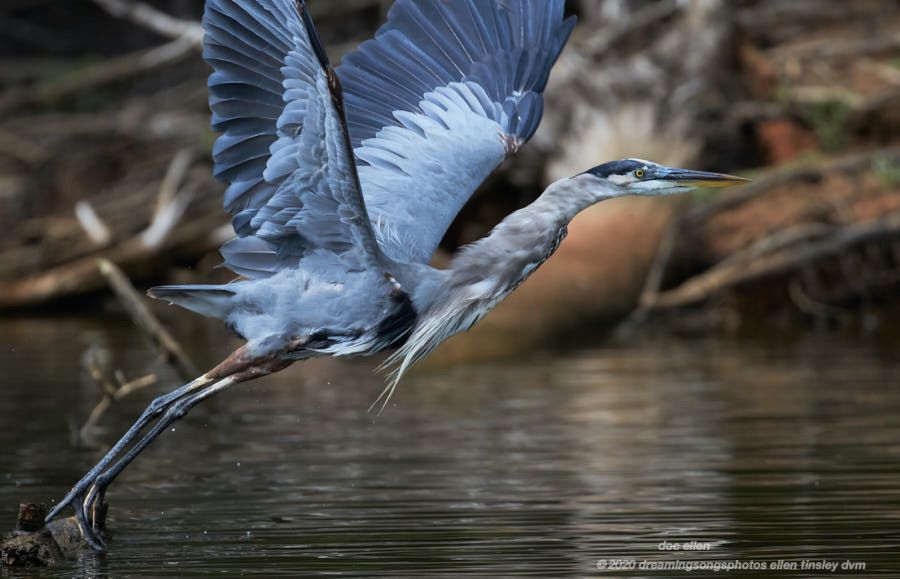
Jordan Lake, Haw River: Feathered Kinetic Energy smoothly surges from the toes through to the sharp beak as this great blue heron launches and displays that energy that is possessed by a body because of its motion. The physics of kinetic energy explained by a single bird.
Neat Hummingbird Fact!
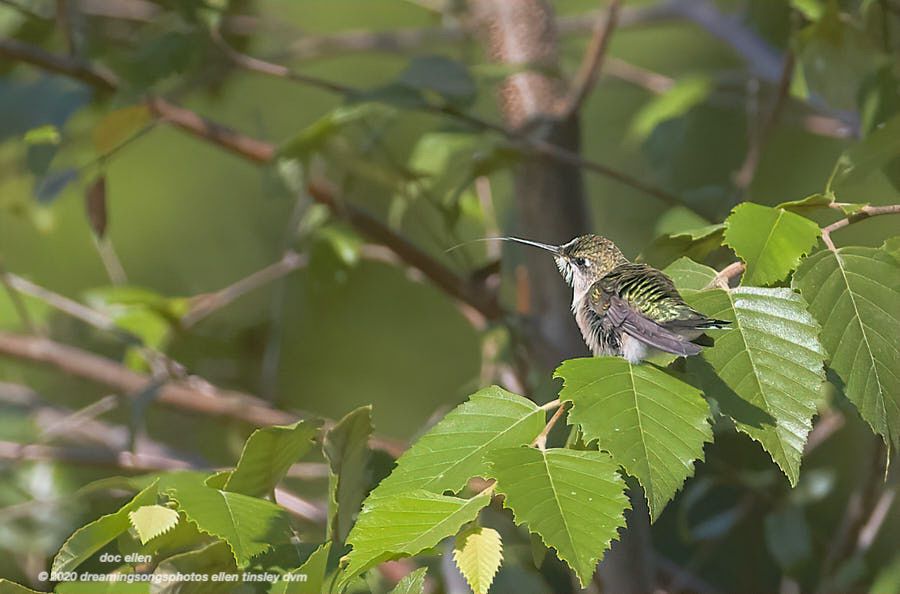
Jordan Lake Dam, Haw River. Hold On!!! Neat fact coming up!!! Guess what: Hummingbirds do NOT suck up nectar. Nope. They lap/lick up the nectar. I have simplified the process explanation: The hummingbird flicks his long tongue out and into the nectar. The tongue flattens and grooves down its length become immersed in the fluid. The tongue then rolls it sides up and the rolling action puts pressure on the nectar and down it goes into the bird’s tummy. In effect, the tongue is an elastic pump. Ok. So, I have given you 2 photos from this morning at the lake so you can see the very long thin tongue on this ruby-throated hummingbird. The black and white photo helps delineate the tongue. Link to take you to a wonderful page with great explanations https://www.livescience.com/51904-hummingbird-tongue-pump.html

 doc ellen's journey