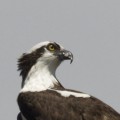
Hershey came by yesterday.
Gave me a gift: his majesty and artistry as he landed above me.
I am delighted to share it with you.
– please have your audio turned up –

I know you have had that feeling: you just know you are being watched …
I slowly turned my head.
Less than 100 feet from me Hershey was perched.
The photographer was the one now being observed.
As I steadied my hands for a shot I was sure would not soon be repeated, 
a fisherman came down the slope behind me and Hershey glanced past me.
I pressed the shutter button and Hershey lifted off the branch and was gone.
Sigh.

The osprey fledgling wandered into the wrong territory.
The mother osprey of the nest he tried to get to took exception to his visit.
Firmly, but without any damage to the youngster,
the adult osprey escorted the juvenile away from her nest.
Notes:  the juvenile is in the lead;
 he is much smaller, because he is a male – not because he is younger
when you can see their backs, the youngster has a white line that bisects his wings.
I call these white spots “rivets”.  They are camouflage spots at the end of his feathers.

The ospreys are fledging at Jordan Lake – taking their first flights.

Male osprey fledgling. Note his orange eye. Adults have a golden eye.
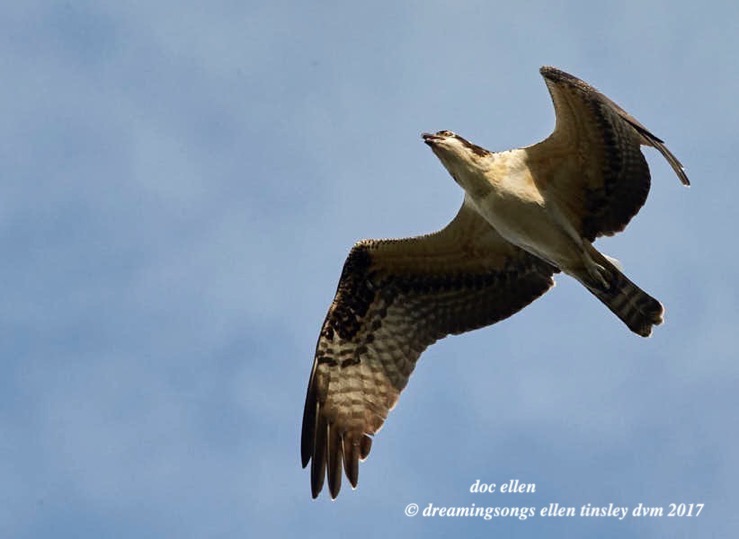

This is a female osprey fledgling. Her dark feathered “brooch” marks her gender.


A little easier to see her dark neck patch.
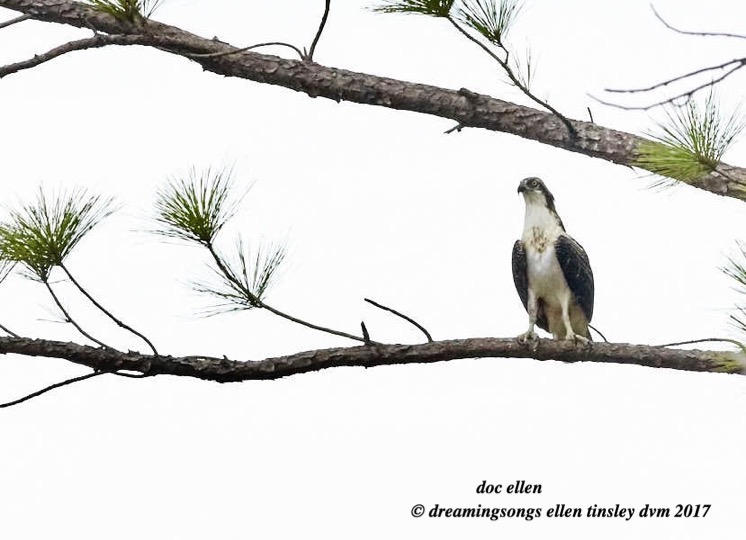

By far the easiest way to tell that these ospreys are fledglings are by the white “rivets” on their feathers.
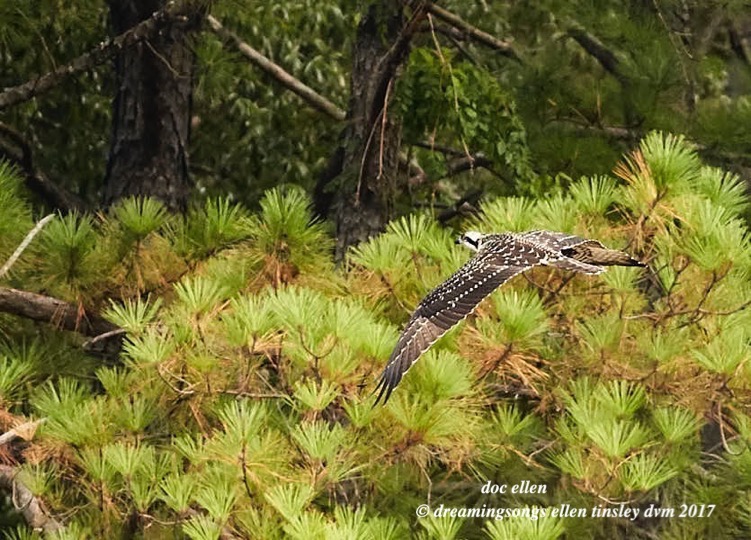

The “rivets” are white dots at the ends of their feathers and will wear off as they age.