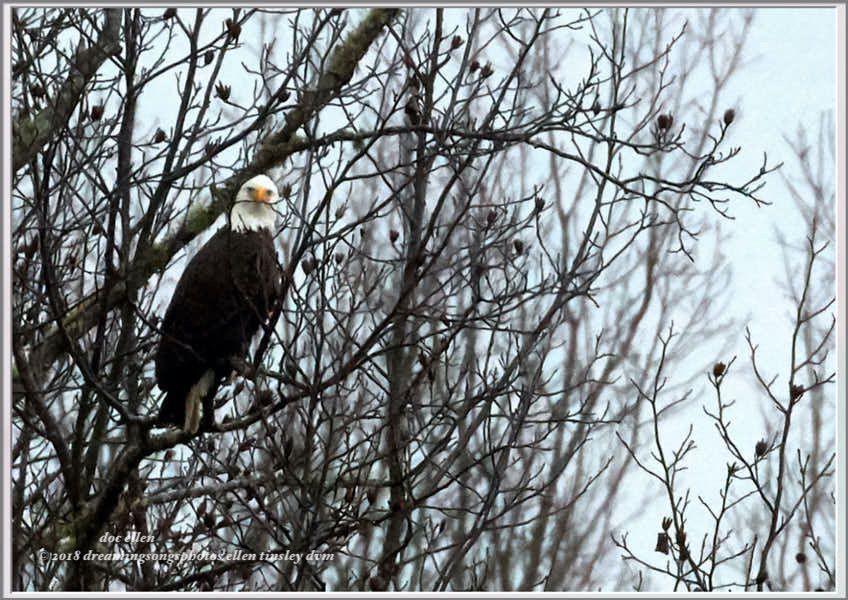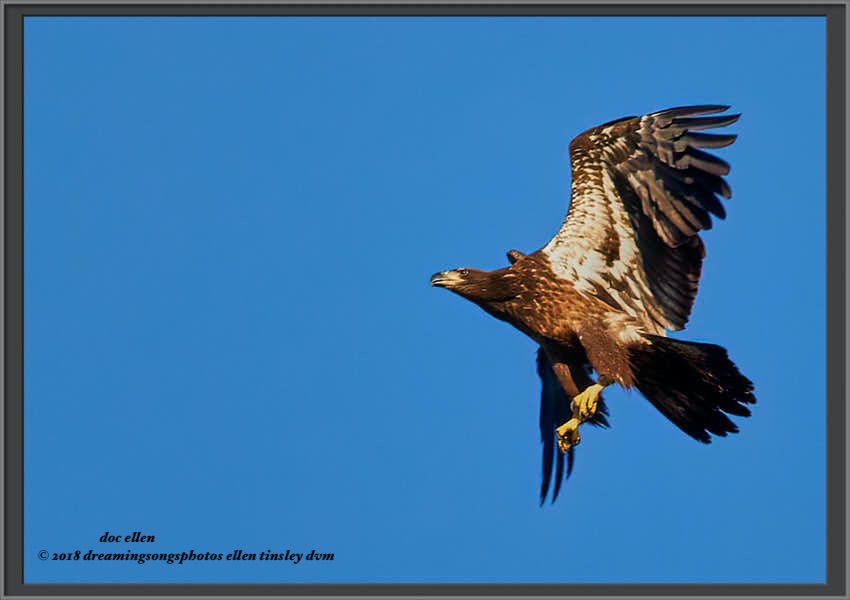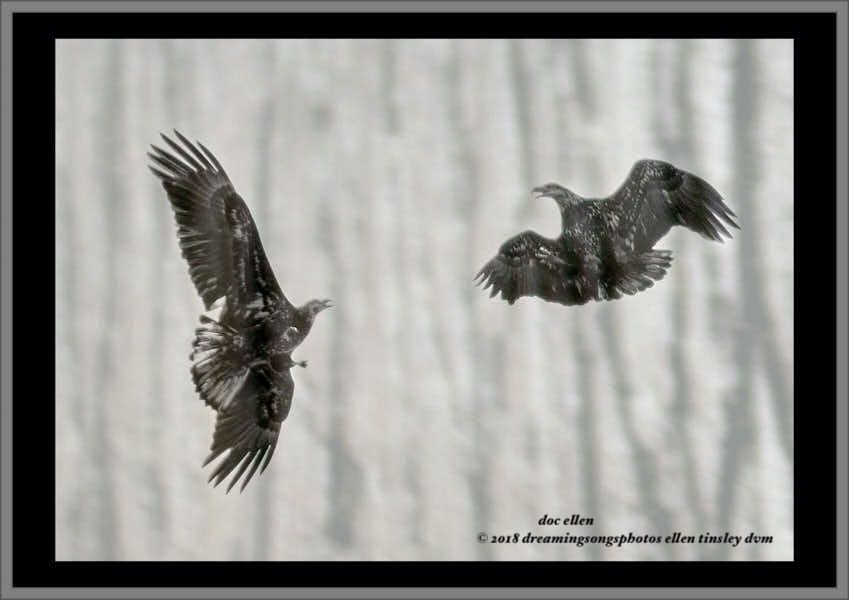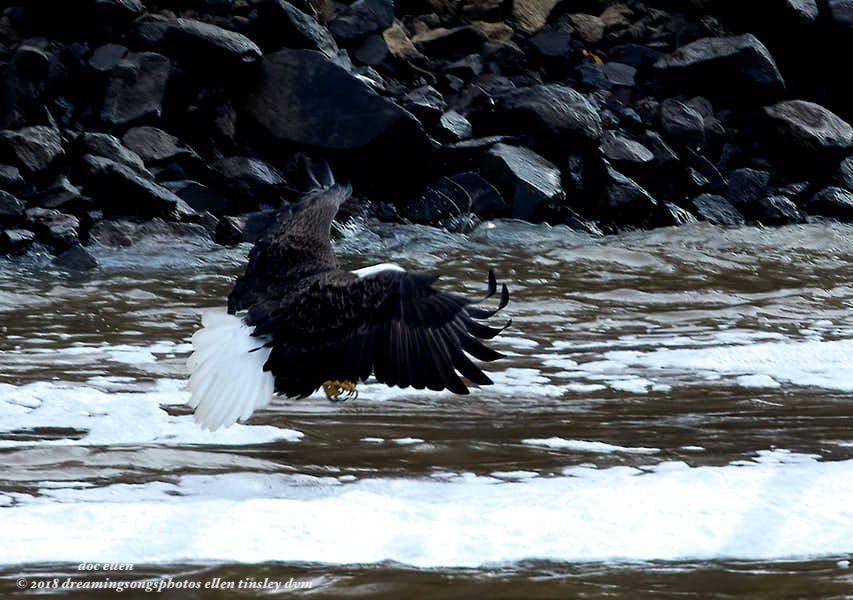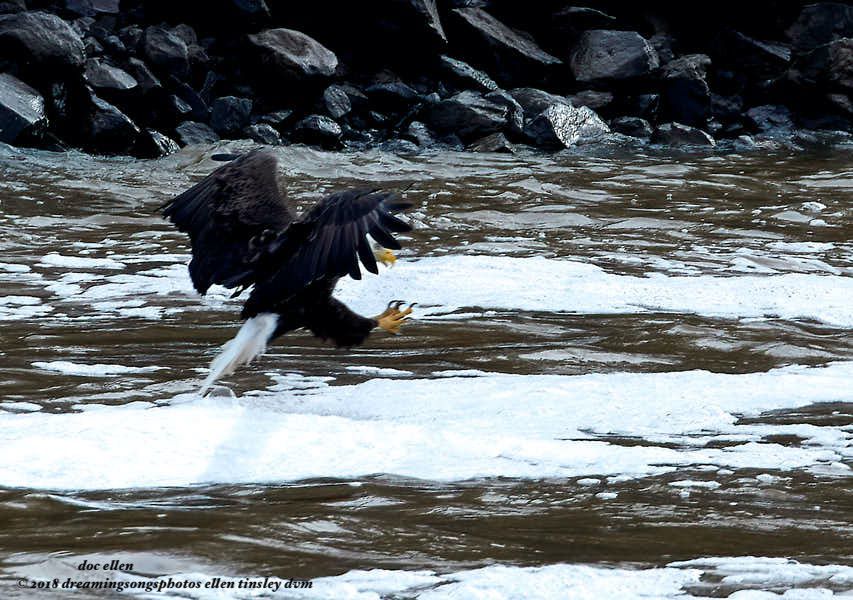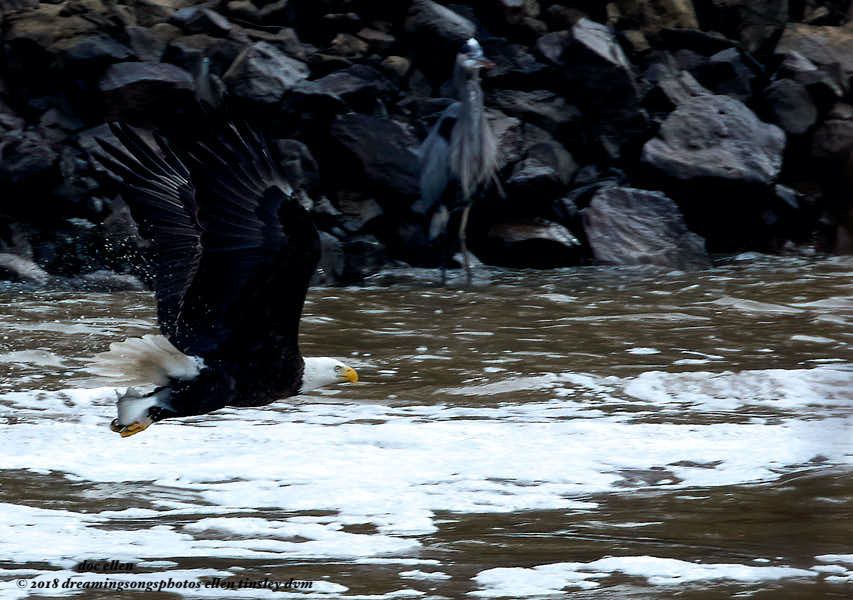
Around the bend from New Hope River came a 2-year-old bald eagle.
He streaked through a bright piece of blue sky at the far end of the dam.
Then he cocked his head up and to the right and I followed his line of sight.
 
I quickly understood why the youngster was in such a hurry.
The adult bald eagle looked down and to the left at the youngster.
Both eagles surged into high gear, the adult dove towards the 2-year-old eagle and they got between me and the sun.
I lost the rest of the chase in the glare of the sun, but could hear both eagles screaming somewhere down river.

First Nest
 
The bald eagle breeding season has started at Jordan Lake.
The parent eagles have begun repairing the nest and getting it ready for the hoped-for new family.
 
Petruchio, the father of First Nest, weighs about 9-10 pounds. A male bald eagle stands about 30 inches tall.
That repair branch that he is hauling up to the nest, brings to mind just how powerful a bald eagle is.
Here you can see the grip of his talons around the branch.  The branch is roughly 3 times longer than the eagle is tall.
Petruchio lifted the branch all the way into the nest – more than 90 feet above the ground.  The nest is unseen to his left.

I admit: I had gotten more than a little frustrated with the rain and more rain.
Then Mother Nature handed me a breath-taking gift.
On top of the dam this morning my friend sang out “look at that”.
Though a fine veil of rain, a rainbow appeared over the peninsula between the Haw River and the New Hope River.
Oh my.

Jordan Lake Dam Neighborhood and How to Tell it is Cold without using a Thermometer!
 
Anytime a bird, like this eastern bluebird, is as round as it is tall, it is cold.
Fluffing one’s feathers traps air and warms the bird.
Having found a patch of sunlight and using the trunk of the pine tree as a block to the wind, this tufted titmouse is warm.
A well-rounded and therefore warmer, pine warbler is looking for another tasty pine seed for its breakfast.
The eastern phoebe is a flycatcher,
but in the cold weather will feed on small berries and any insect or spider lured out in the open by a patch of warm sunshine.
This great blue heron, while stalking a rival, has done just what the smaller birds do, and become well-rounded and fluffed against the cold.