Jordan Lake Dam, Haw River. There was a lot of fog across the river and up through the meadow this morning. It was delightfully cool. The fog looked like it had its long skirts on and was dancing to the morning song. Take care, be safe. Stay well!
photography
CategoryDoc Ellen’s Evening Note 10/04/2020
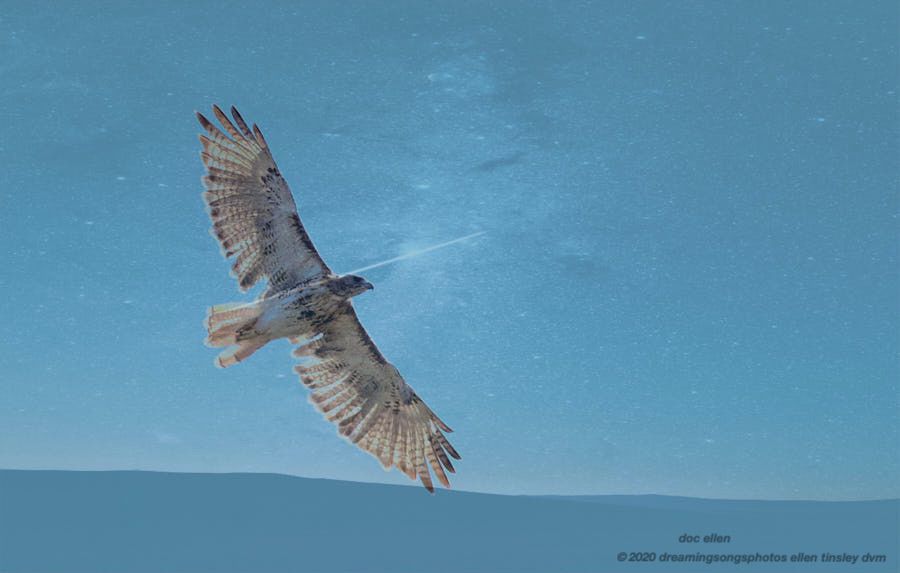
Jordan Lake, Haw River: Doc Ellen’s Evening Note 10/04/2020. It is a comfort to me to know that there are a pair of eyes joining those of the Creator to make certain I have undisturbed sleep and sweetest of dreams. Thank you red-tailed hawk for being a guardian this night.
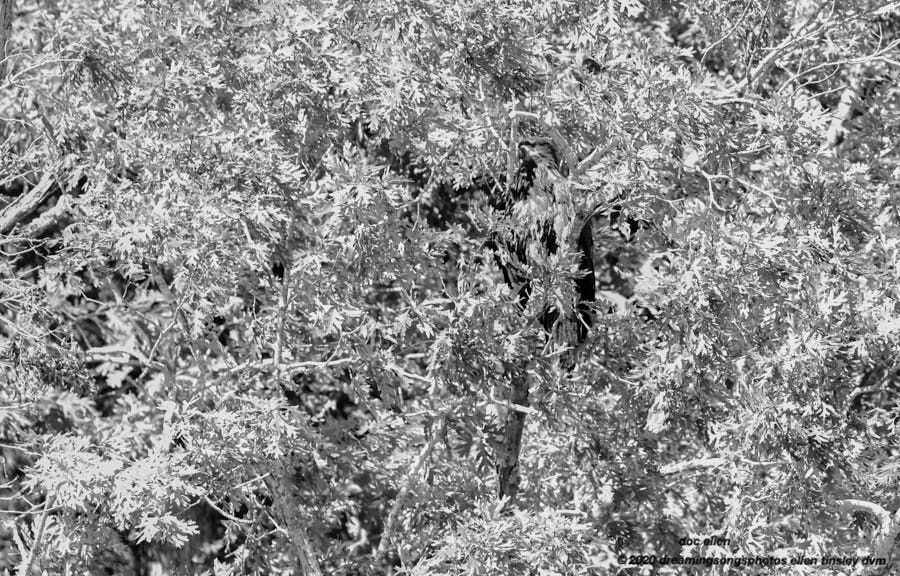
Doc Ellen’s Palette: Bald Eagle Fledgling
Jordan Lake, Haw River: Doc Ellen’s Palette, where the 12-year-old child in me looks at the world a wee bit differently. Bald Eagle Fledgling in Black and White. And, oh so well camouflaged – look for the very black beak!
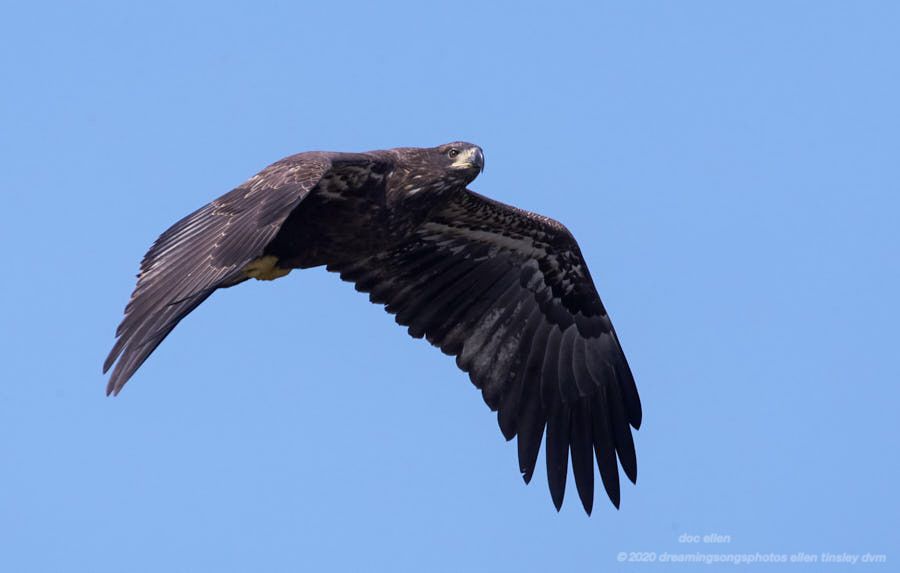
Big Bird, Little Bird Day
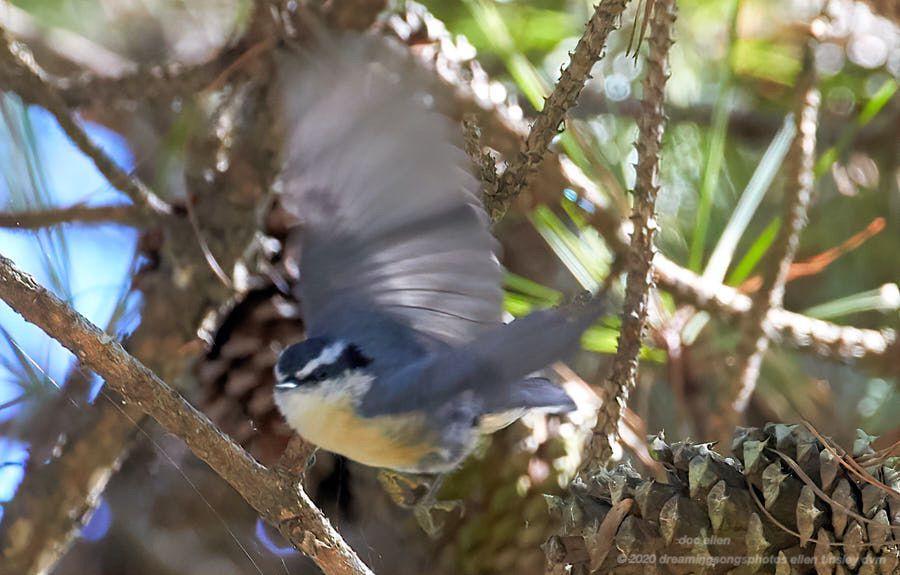
Jordan Lake Dam, Haw River, October 2, 2020. It was a big bird day: a fledgling bald eagle over head. It was a little bird day: a red-breasted nuthatch in flight. Migratory update: I last saw the Kirtland’s warbler at noon on Wed. at the dam, did not see her Thursday or Friday. I have been watching palm warblers and Cape May warblers in the same area. Most likely the Kirtland’s has headed on towards the Bahamas – I hope her flight goes well!
Kirtland’s Warbler, update
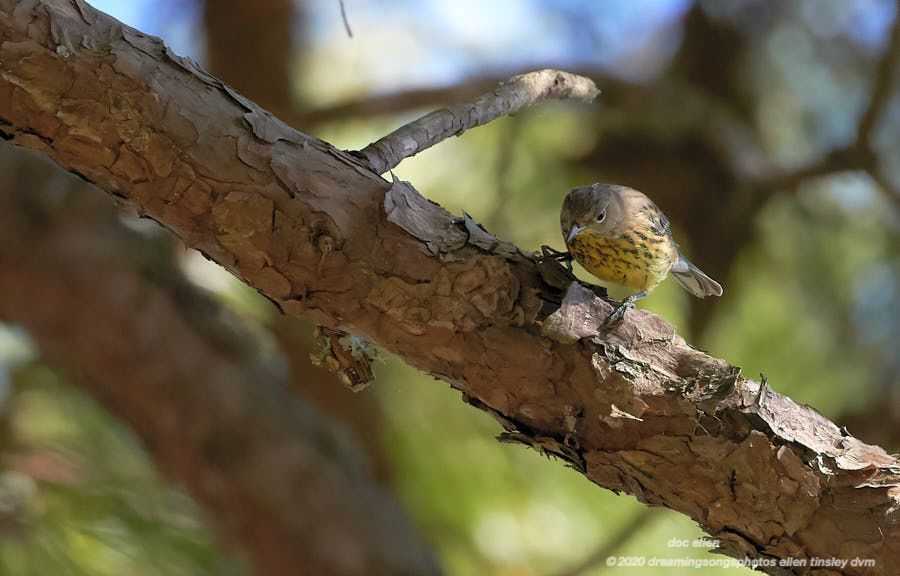
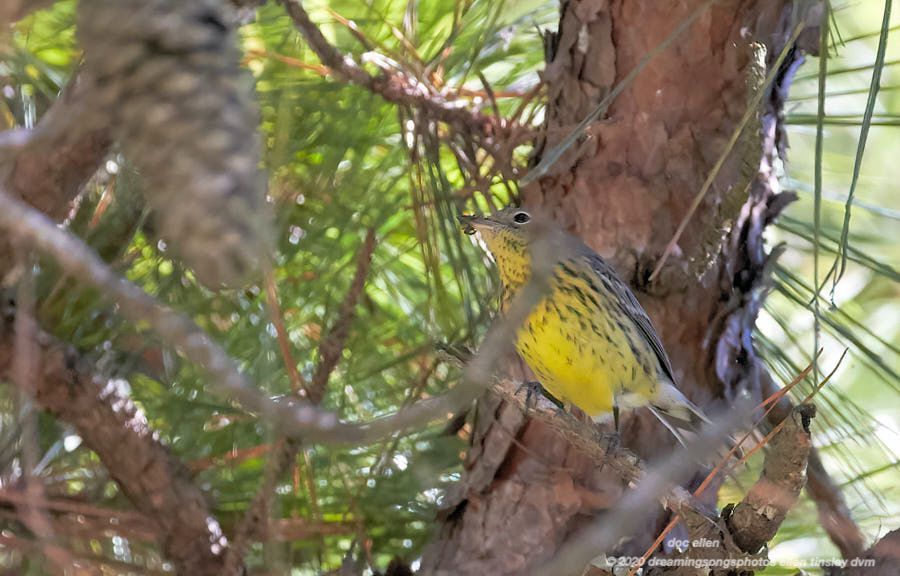
Jordan Lake, Haw River, Wednesday September 30, 2020: Update on Kirtland’s Warbler – she is STILL HERE! Yes! I had wondered if last night’s rain and colder weather would send her on the next part of her journey, but there she was, 1) eyeing a protein packet 2) happily eating a spider protein packet 3) a yellow-throated warbler was also there. She has been active all morning, up until noon and then again in the later afternoon … I hope she is still there tomorrow and that those of you who haven’t seen her yet get a chance to do just that.

Kirtland’s Warbler Hunting Protein Packets
Jordan Lake Dam, Haw River: the Kirtland’s warbler was still at the riprap this morning! I caught her feeding on protein packets, aka: spiders, mites, caterpillars and insects. She was quite busy and very intent on feeding up for the next leg of her journey flight to the Bahamas. About half-way through the slide show she gets a small critter of some sort and quickly swallows it and goes right back to hunting. I don’t know if the stormy weather tonight will send her on south or if she will stay another day or two. It was grand watching other birders get their first glimpse of a Kirtland’s warbler – a feast for my heart.
 doc ellen's journey