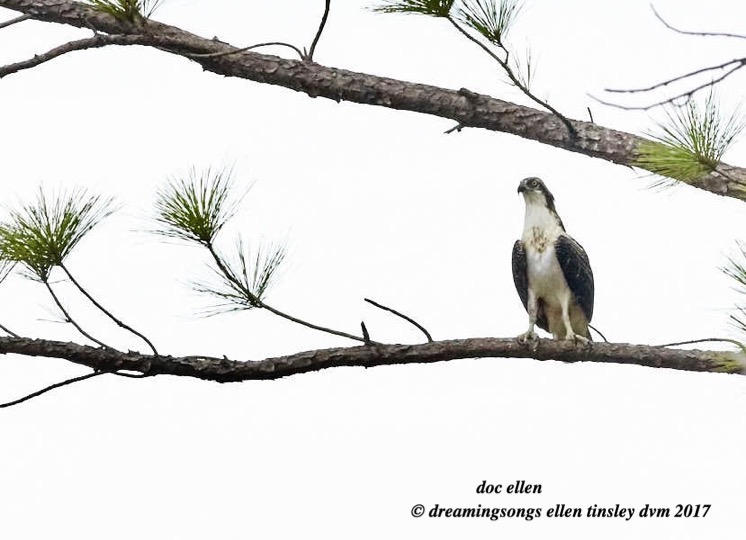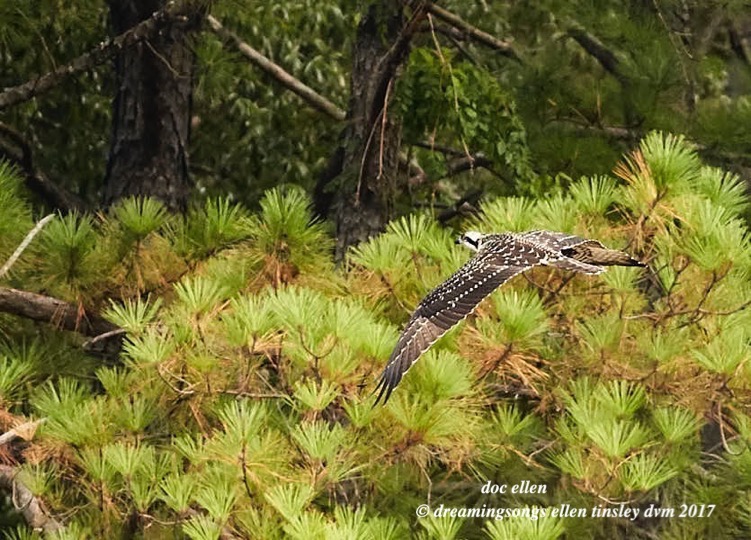
The osprey fledgling wandered into the wrong territory.
The mother osprey of the nest he tried to get to took exception to his visit.
Firmly, but without any damage to the youngster,
the adult osprey escorted the juvenile away from her nest.
Notes:  the juvenile is in the lead;
 he is much smaller, because he is a male – not because he is younger
when you can see their backs, the youngster has a white line that bisects his wings.
I call these white spots “rivets”.  They are camouflage spots at the end of his feathers.
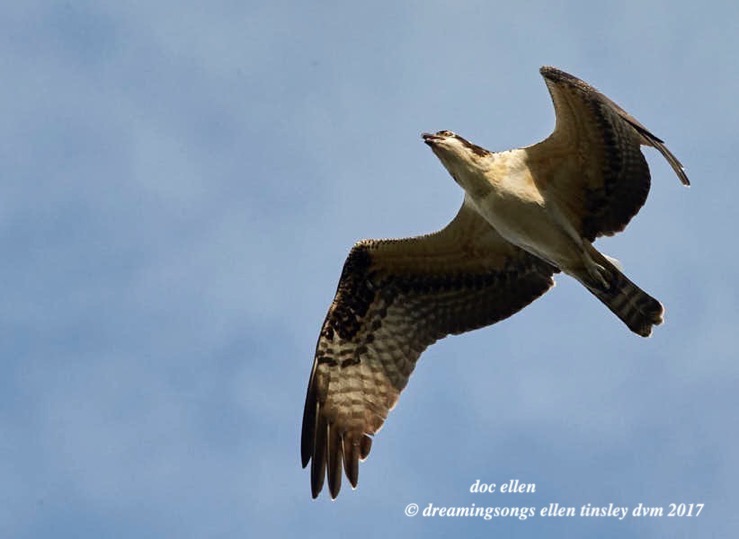
The ospreys are fledging at Jordan Lake – taking their first flights.

Male osprey fledgling. Note his orange eye. Adults have a golden eye.


This is a female osprey fledgling. Her dark feathered “brooch” marks her gender.


A little easier to see her dark neck patch.


By far the easiest way to tell that these ospreys are fledglings are by the white “rivets” on their feathers.


The “rivets” are white dots at the ends of their feathers and will wear off as they age.

Big birds, little birds, plain brown or black birds and one of startling color!

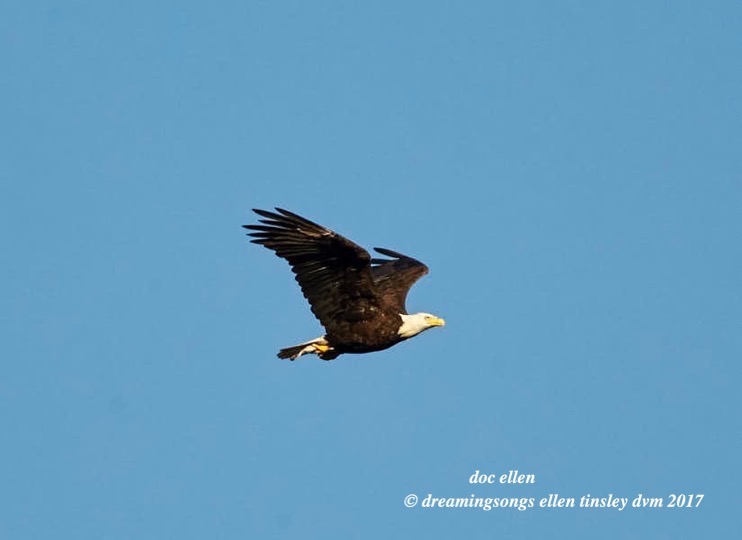
4-year-old bald eagle with a small fish for a pre-brunch appetizer!


The tiny brown-headed nuthatch has snagged one of her favorite sources of protein:

a spider from the web below her.


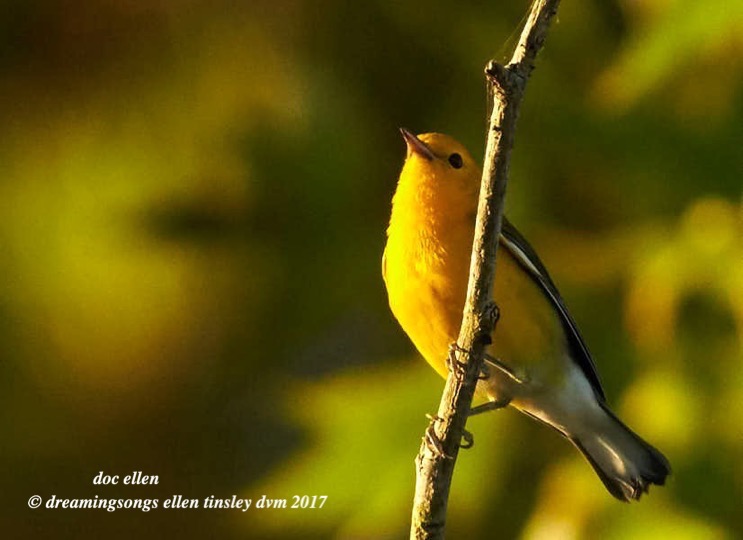
This brilliantly yellow bird is a prothonotary warbler.

They come for the summer nesting season.


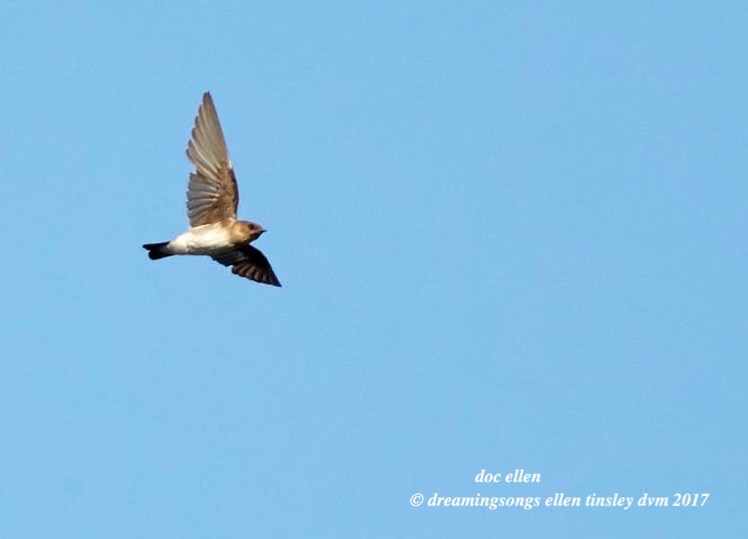
A northern rough-winged swallow:

a tiny speed demon that loves to consume flying insects such as mosquitos.


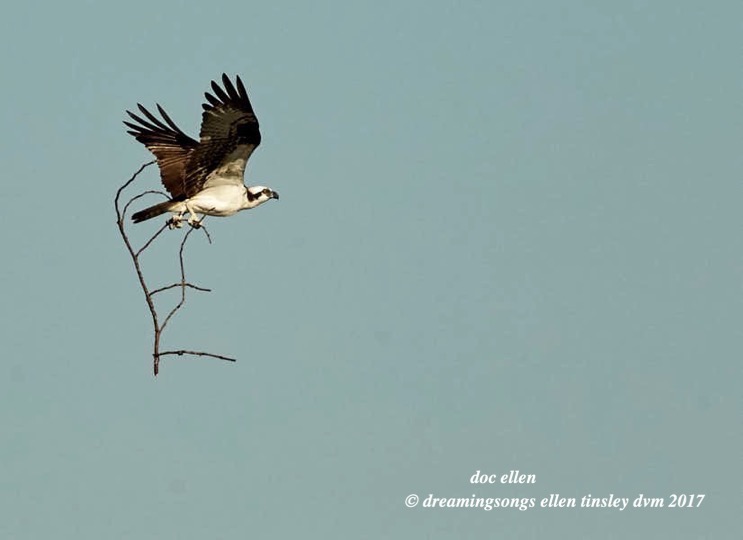
There is WAY more branch here than osprey!

I would have loved to have been able to see him get it into his nest.


Closeup of a beautiful black vulture.

I really appreciate their contributions to the cleanup around the lake.

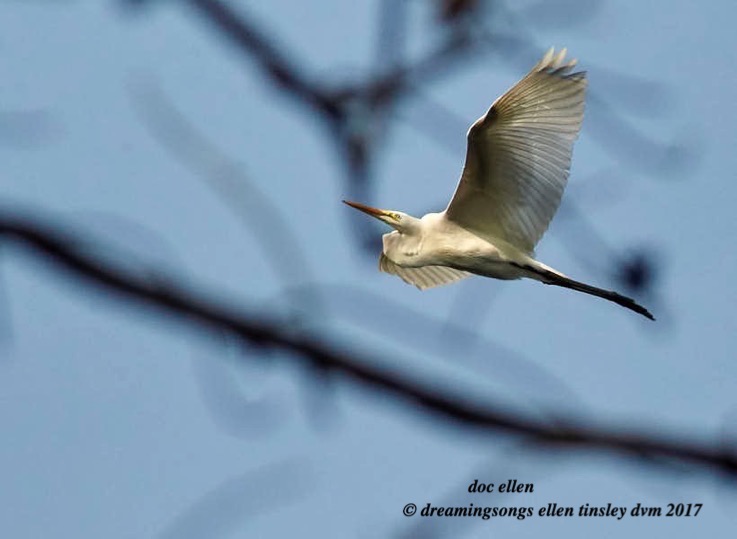
Elegant, graceful, simply beautiful, Great Egret
 
 
Eastern Kingbird fledgling – yelling for a parent to feed him.  
 
 
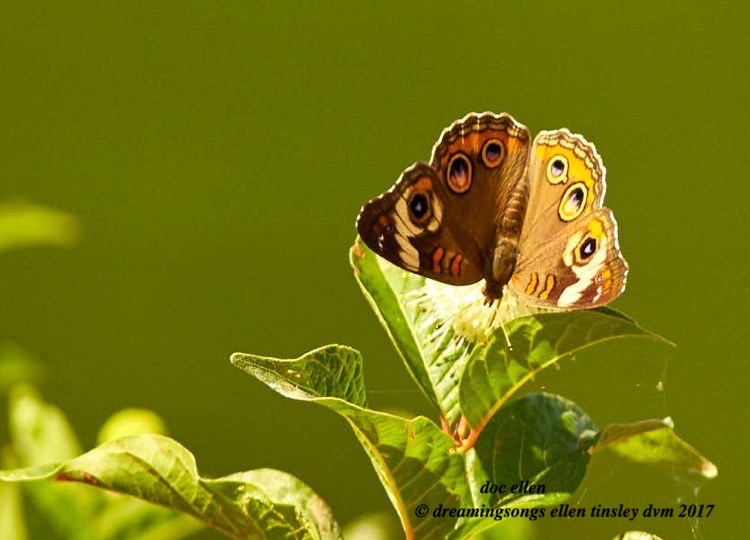
the Common Buckeye butterfly
 
 
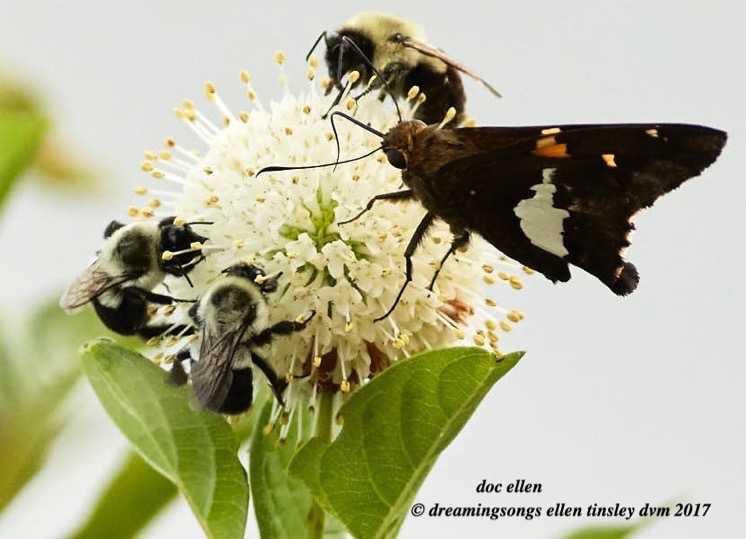
A Silver-spotted Skipper butterfly sharing a button bush blossom with some Eastern Bumblebees.
All these insects, along with the Common Buckeye are important pollinators.