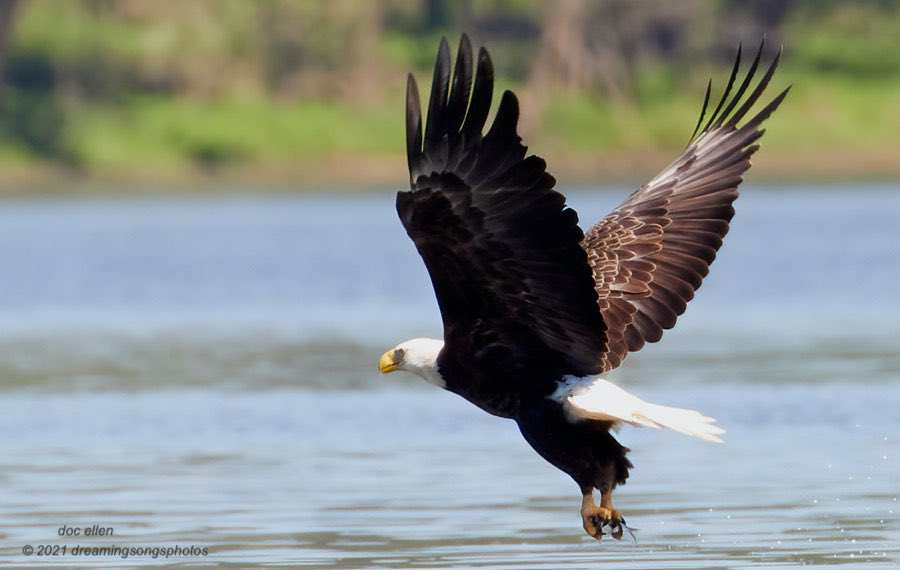
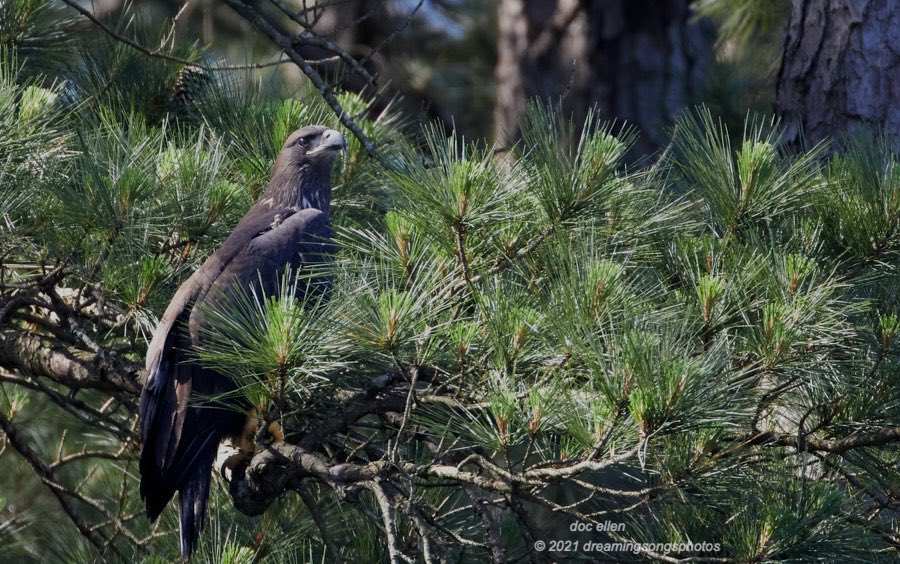
Come join me for my next Webinar: a journey through a year with the Bald Eagles of First Nest at Jordan Lake. We will explore what it means to be a parent bald eagle and how to grow as a bald eagle chick and then fledgling. The webinar will be given twice. You can register and attend either

Tuesday June 1, at 2:00 PM at https://attendee.gotowebinar.com/register/7617663262441900048 or

Thursday June 3, at 7PM at https://attendee.gotowebinar.com/register/7604824265165301005 .

There is a registration fee of $9.50.

I hope you will come and join Mom Kate and Dad Petruchio and some of their chicks during the 1 hour presentation.

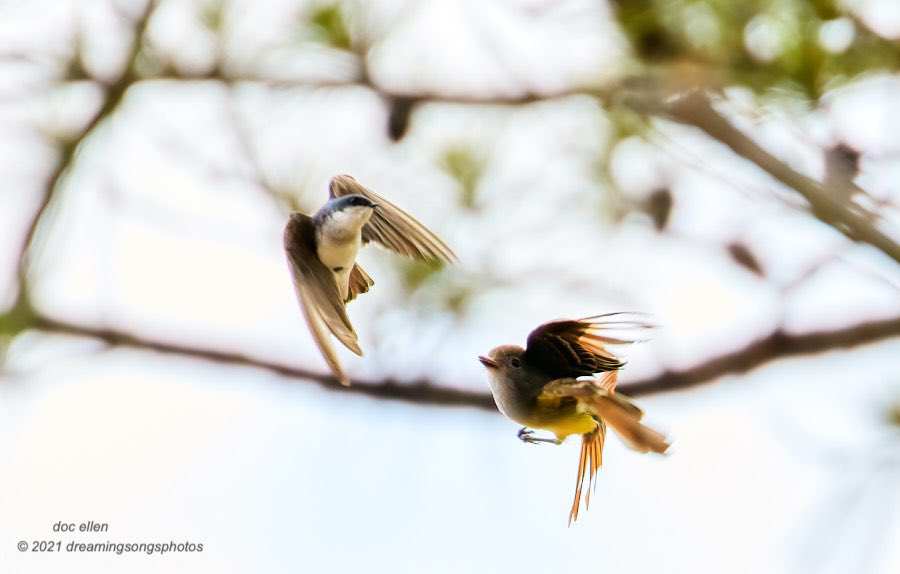
Jordan Lake: the lake hosts several species of flycatchers. In these photos you see two of them: a Tree Swallow on the left and a Great Crested Flycatcher on the right. Both of these species are cavity-nest breeders and will compete for the same abandoned woodpecker nest cavities. Both species also compete for the same flying insects. In the first photo the great crested flycatcher has nesting materials in its beak. There was a lot of competition for who got the best cavity for their nest … ultimately they both used the same tree with their nest cavities about 90degrees and 8 feet apart.

Jordan Lake, Bald Eagle Nest report: H&G NestOne of the chicks at the nest tried hard to impress Dad Hershey. Dad dutifully watched the chick bounce, but quickly went back to doing other nest-keeping chores. The chick is not yet properly branching, when it steps up on the branch to the left of the nest. Soon though, it will be much higher above the nest in proper branching mode.

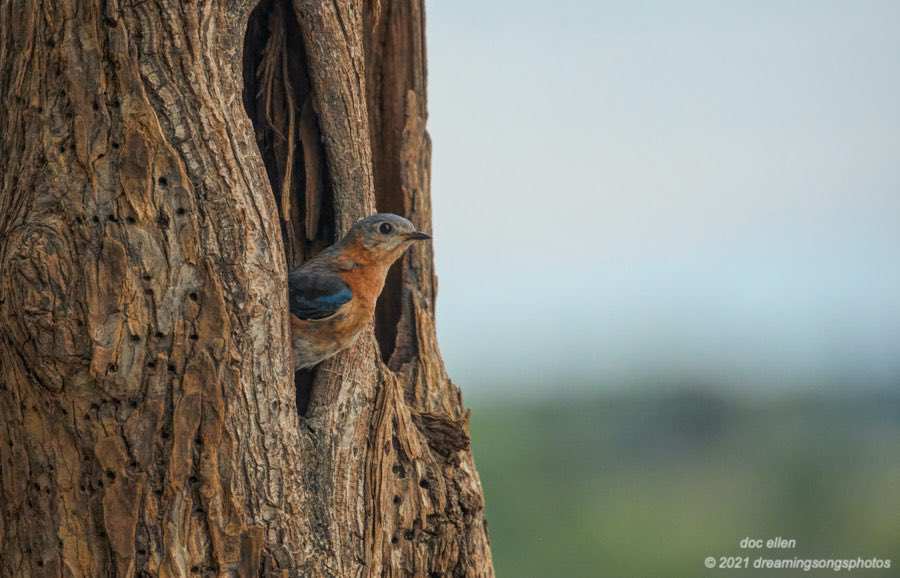
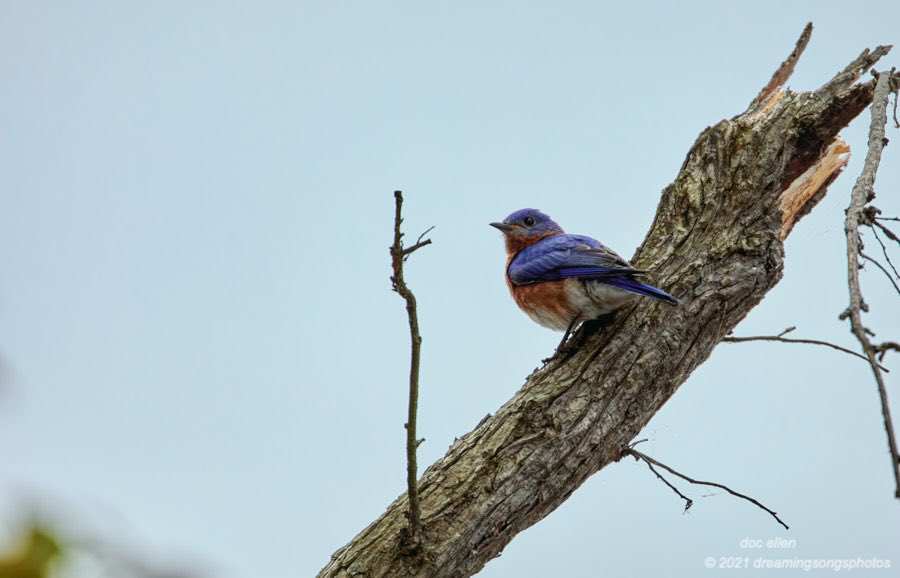
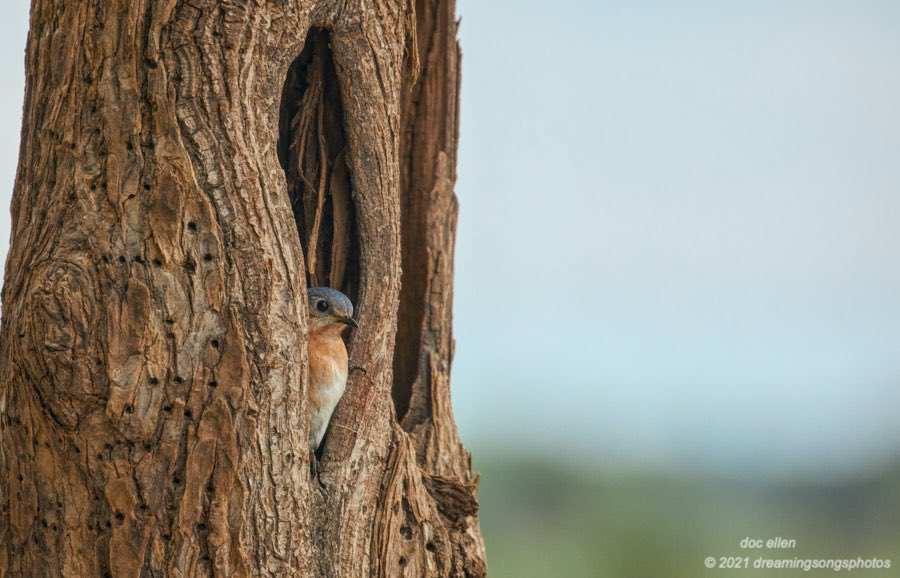
Jordan Lake: often when I am out monitoring bald eagles, I have time to watch other birds too. This pair of eastern bluebirds have selected a tree cavity for their nesting season. I am always delighted when I can find a cavity breeder such as the eastern bluebird using a natural tree hole for their nest placement. Don’t get me wrong … the bluebird population was saved in part by the efforts of many a birder who placed bluebird boxes about their property and gave these thrushes a place of safety for their families. Natural cavity or bluebird box: these small birds make use of what they can claim for their home!