I have updated my Fine Art Gallery.
You can see this and other new additions at www.dreamingsongsphotos.com
I have updated my Fine Art Gallery.
You can see this and other new additions at www.dreamingsongsphotos.com
Eagle Nest / First Nest of Jordan Lake
BTW I am changing this nest name to First Nest to help us all keep the nests straight.
This is the very first nest I started monitoring for the Army Corps of Engineers (thank you, A.C.E.!).
Here is Kate leaving the nest after she and Petruchio had spent some time working on it.
Kate should start laying eggs the end of this month.

H&G nest
A little hard to see with the glare of the bright afternoon sun yesterday!
That is Hershey flying up to the nest.
Godiva is sitting on her usual perch on a branch in front of the nest,
Yes, she is hollering – maybe because Hershey isn’t bringing a repair branch?
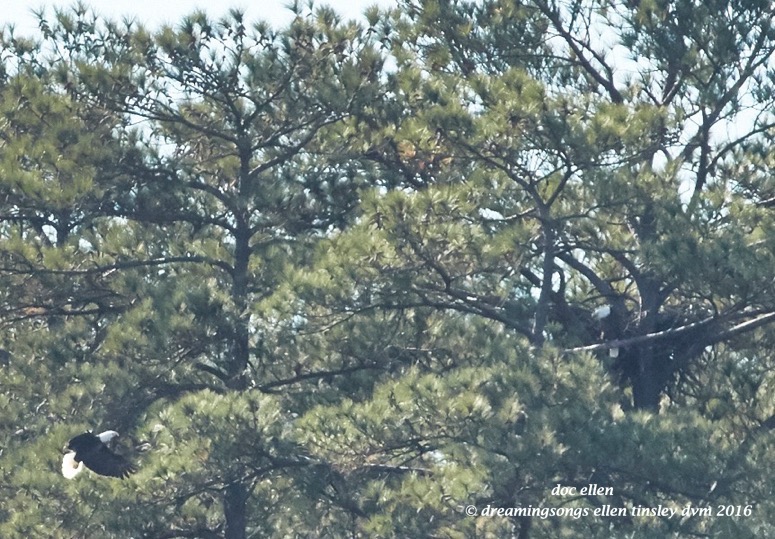
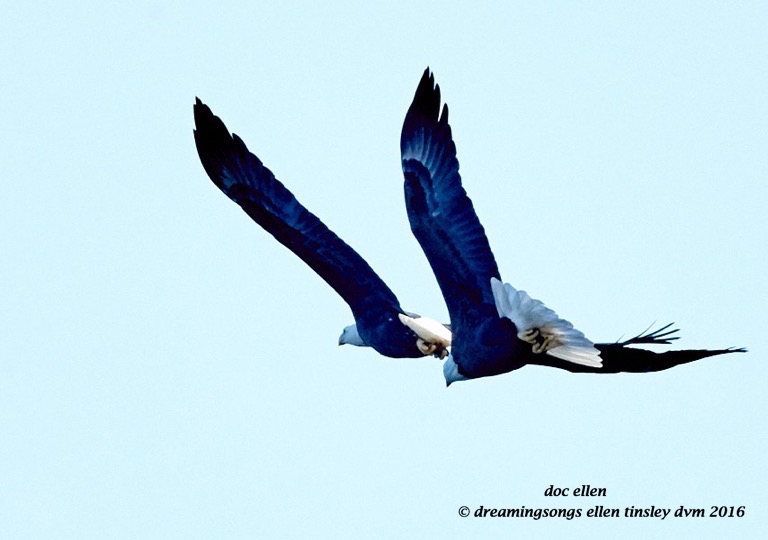
Update on the new Jordan Lake eagle pair, Lady Lake and Heritage:
With the help of a pair of hikers, we now know where the nest of the eagle couple is located.
I want to thank the hikers for their thoughtfulness and concern:
they brought the nest to the attention of me and the State Park Rangers and asked how to help protect the eagles.
Now we can all work together to be sure the nest, parents and hoped for eaglets have a safe environment.
I will try to make updates when I can, however the nest is in an area that will make that difficult.
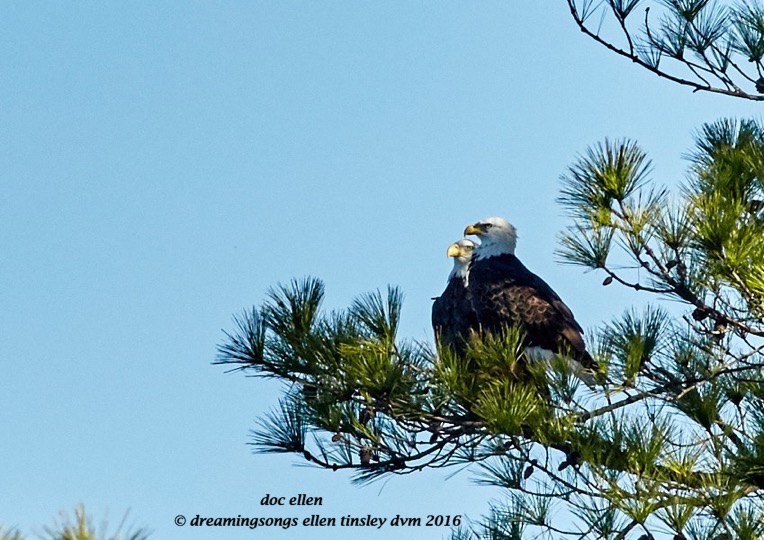
In the photo, that is Lady Lake in the lead, with Heritage following her.
BTW: I call the female Lady Lake because she stands very tall and Heritage is named after the Heritage Days at Jordan Lake.
I found this pair of bald eagles, one beside the other, perched in this large pine at Jordan Lake.
They are a new pair to me…I wonder if they have a nest here or are they migrants?
I think the male is the one closest to me.
At the Eagle Family nest, I found Petruchio grooming, way to the right of his nest.
The storms of the fall have shifted some of the trees between me and the nest – making the nest harder to see.
The nest has some new sticks added to it.
I didn’t see Kate.
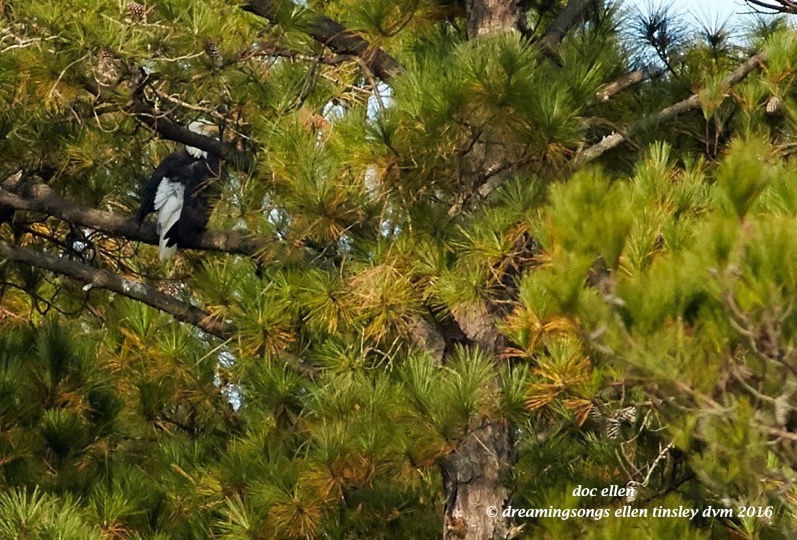
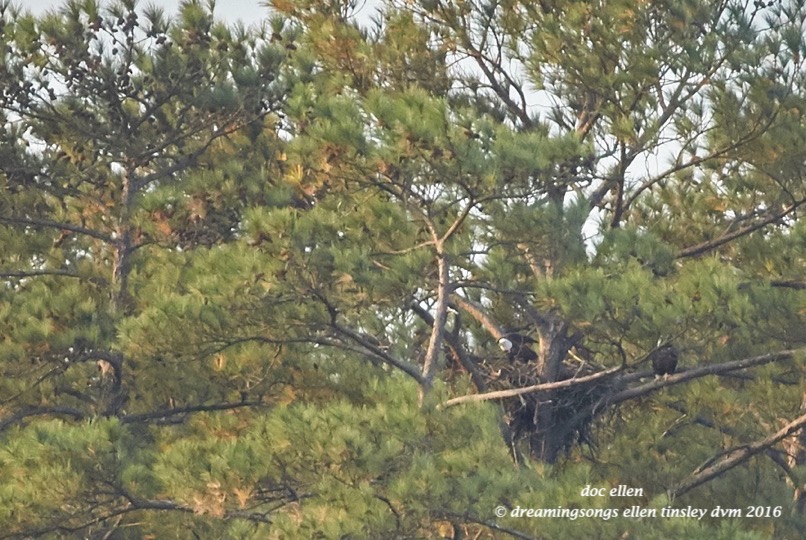
At the H&G nest, I found both parents there.
Hershey was in the nest looking over what is needed for repairs.
Godiva is off to the right, you can see her feet and body and a tiny sliver of her white head.
I was at the Jordan Lake dam today, early…very early.
This male American kestrel flashed by me.
Sky was grey, he was fast, and the sun wasn’t helping my attempted shot.
But, as sometimes happens, the unintended is interesting…
so, here is the kestrel in the abstract.

 doc ellen's journey